Showing posts with label nasonov gland. Show all posts

Friday, 21 August 2015

Gatsbees B-Log: July 2015


‘Look girls’, I said,
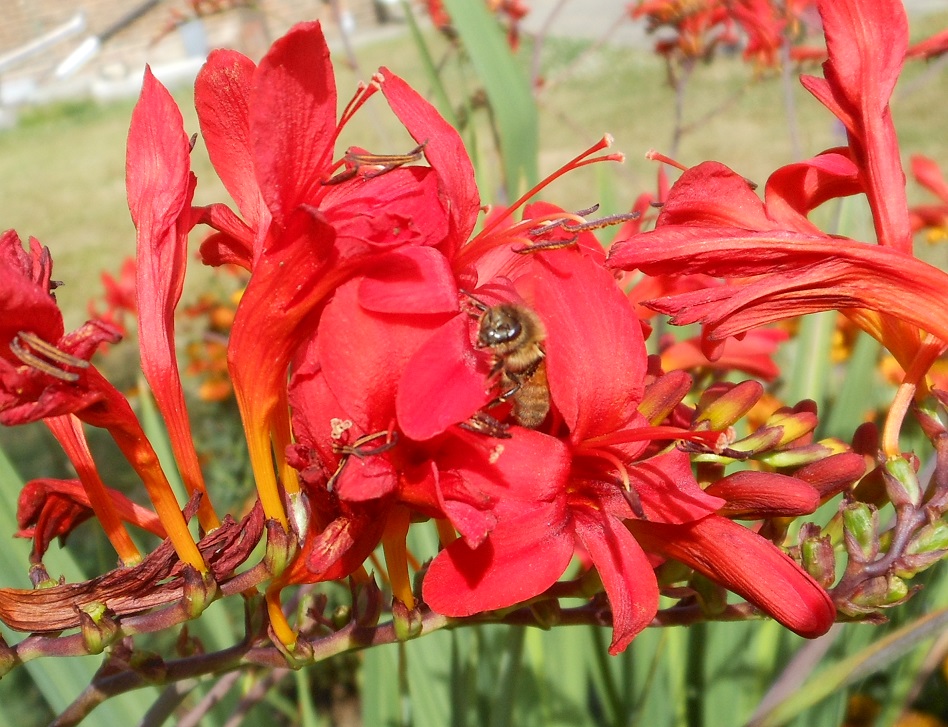
Crocosmia 'lucifer'(non-invasive type of Montbretia)

it’s the end of July


and I’m all beed out.


Too many swarms. Too many colonies.


Next time I go to the apiary and see a swarm


I’m going to ignore it……….


let it fly away and find itself a new home………..


Oh!
Lavandular angustifolia

Sort yourselves out, I’m going home...

Helenium 'Moorheim Beauty'

to do some gardening!


I’m back now, and you’re still there? OK, same routine; shake into box, check!


Girls fanning to send out location with their 'Nasonov' gland pheromone, check!


Bees going into hive?

Rachel: front-line photographer
Check!

Tom and myself checking on the new colony

Sometimes the bees freestyle with their comb if they’re not properly contained in the hive -


properly for us, that is, not them...


so we have to rearrange their perfectly air conditioned house if we don’t want them to permanently jam themselves in, normally using elastic bands (but airfield tape will do in an emergency),


which they chew off


while they attach the comb properly to the frame


and we remove the remaining tape asap.
Anybody spotted the queen above? A puzzle because she’s a mated queen and I couldn’t think where she’d come from...


until I found the other nucleus box empty, because they’d decided that wasn’t where they wanted to live!

Great Willowherb (Epilobium hirsutum)

Birdsfoot Trefoil (Lotus corniculatus)


Going back to this photo from earlier...


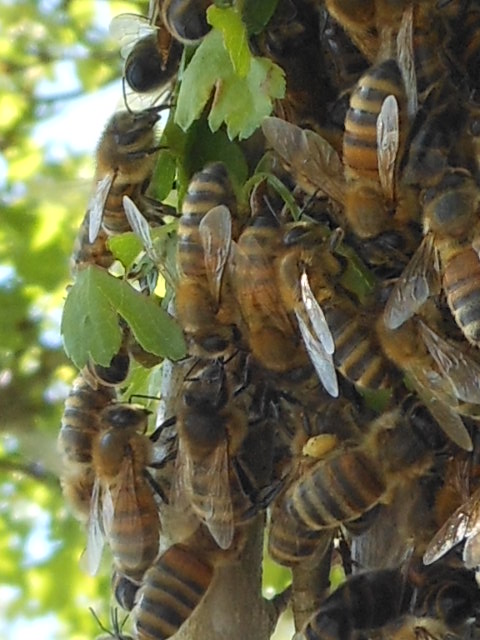
I thought you might like to see a close up of this row of tiny claws supporting the weight of the cluster. Remarkable!


I can only guess that they clustered like this because the hive was too full of bees, so I gave them a super with empty frames for a bit of space and something to do. Spoilsport!

Gatekeeper Butterfly (Pyronia tithonus), because we support all Gatwick pollinators!

Gillybee x

Wednesday, 17 June 2015

Gatsbees B-Log: May 2015

Swarming is a joyful time for the bees, when half the colony leaves the nest with the old laying queen to find a new home...


...leaving behind a peanut shaped capped queen cell for the remaining bees to care for.

(That’s next month’s story)

They usually fly onto a nearby tree, fence, lamp post etc. (check out google images for whacky places on which they land) where they hang for between 20 minutes and a couple of days, to make sure the queen is with them!

And to send off the scout bees to look for a new home.


If nobody comes to collect them, they fly off again together, swirling through the air to make a nest in their new found location, which could be an empty hive...

A hole in a tree...

Or, If the weather changes, they often make their nest where they are – in a Cotoneaster hedge in this case;

A fantastic construction, but they are entirely at the mercy of the weather and they would be unlikely to survive.  


The cluster of bees contains a variety of ages, some of which would have been returning from foraging expeditions with pollen and nectar when the swarm emerged from the hive. This will last them for about 3 days.


They don’t always make it easy for beekeepers to collect them...

Settled swarm on Hawthorn, Ashley's Field


The best method in this case was to put a cardboard box over the top of the swarm...


....then gently smoke them up into it.


The bees use a branch to bridge across the gap and begin to go up into the box.


Last few...


Just a quick look in the box…


As the bees hook onto each other from the top of the box, we can turn it upside down without disturbing them and place it on a sheet with a stick to make an entrance for them. No expense spared!


They fan their wings and send the scent (from their nasonov gland in the final section of their abdomen) into the air, to call in all the stragglers.


Ah, this a much better picture of fanning:

Nasonov gland visible as the lighter section near the tip of the abdomen

At dusk, when they have all found their way into the box, it’s wrapped up in the sheet and the bees are taken away, gently but firmly shaken from the box into a clean hive, the new frames carefully lowered on top of them and the hive closed up with an entrance left open. It’s a great time to have some help from my young apprentice!


The bees cluster together on the new frames and use the pollen and nectar, which they brought with them as stores...

...to fuel the energy they need to make beeswax in the glands under their abdomen... 


...while the foraging bees continue to bring in food from the May flowers.

Hawthorn (Crataegus monogyna)

Holly (Ilex aquifolium), the tiniest of flowers has a good source of pollen and nectar for the bees


Gillybee X