

The specimens room: rows of microscopes on work stations and cabinets line the walls
'Why study flies?' is a question we are asked A LOT when out in the field (members of public initially assume we are catching butterflies). As well as being important pollinators, they perform a wide variety of ecosystem functions. They make up a big part of the foodchain for other wildlife, they help to break down rotting organic matter and contribute to nutrient cycles. Without flies, quite frankly us vertebrates would not be here.
We don't often need to catch butterflies and the other larger 'macroinverts' for identification, as many are doable in the field or with a clear photograph. Also, there is only a small handful of butterfly species to become familiar with (there are 33 at Gatwick). Identification of flies however can be subtle, as they can be very small and are a huge group of insects, with over 7,180 species in the UK vs. just 59 butterflies!
We don't often need to catch butterflies and the other larger 'macroinverts' for identification, as many are doable in the field or with a clear photograph. Also, there is only a small handful of butterfly species to become familiar with (there are 33 at Gatwick). Identification of flies however can be subtle, as they can be very small and are a huge group of insects, with over 7,180 species in the UK vs. just 59 butterflies!

What makes a fly a fly? They are defined by their scientific name Diptera, which means two wings. They would have four, but the rear pair of wings have evolved into halteres; two stick-like organs which are essential for balance and control, arguably making flies the best fliers.

Dipterist extraordinaires Barbara and John Ismay led the workshop, with excellent introductory presentations aimed at just the right level of detail. We then sat at the microscope stations and each attendee was given a box of specimens, each labelled only with a number. It was up to us to run through the key and attempt to get each one down to a family.


Profile shot of a fancy modified antenna


The BENHS workshops and field meetings are free and run by expert volunteers. If you do manage to get along to one of the sessions then I highly recommend that you sign up for membership to this worthy organisation.

Practicing with keys reinforces familiarity with the important invertebrate charactertics, such as position of eyes, shape of antennae, veination of wings, even the bristles on the legs.
The key to families of Diptera was pretty simple and easy to use. I will share a few of the initial steps below....

Step 1. Is your body plan freaky as heck, or do you basically look like a fly?

Step 2. Are your antennae rather simple and segmented, or highly modified?
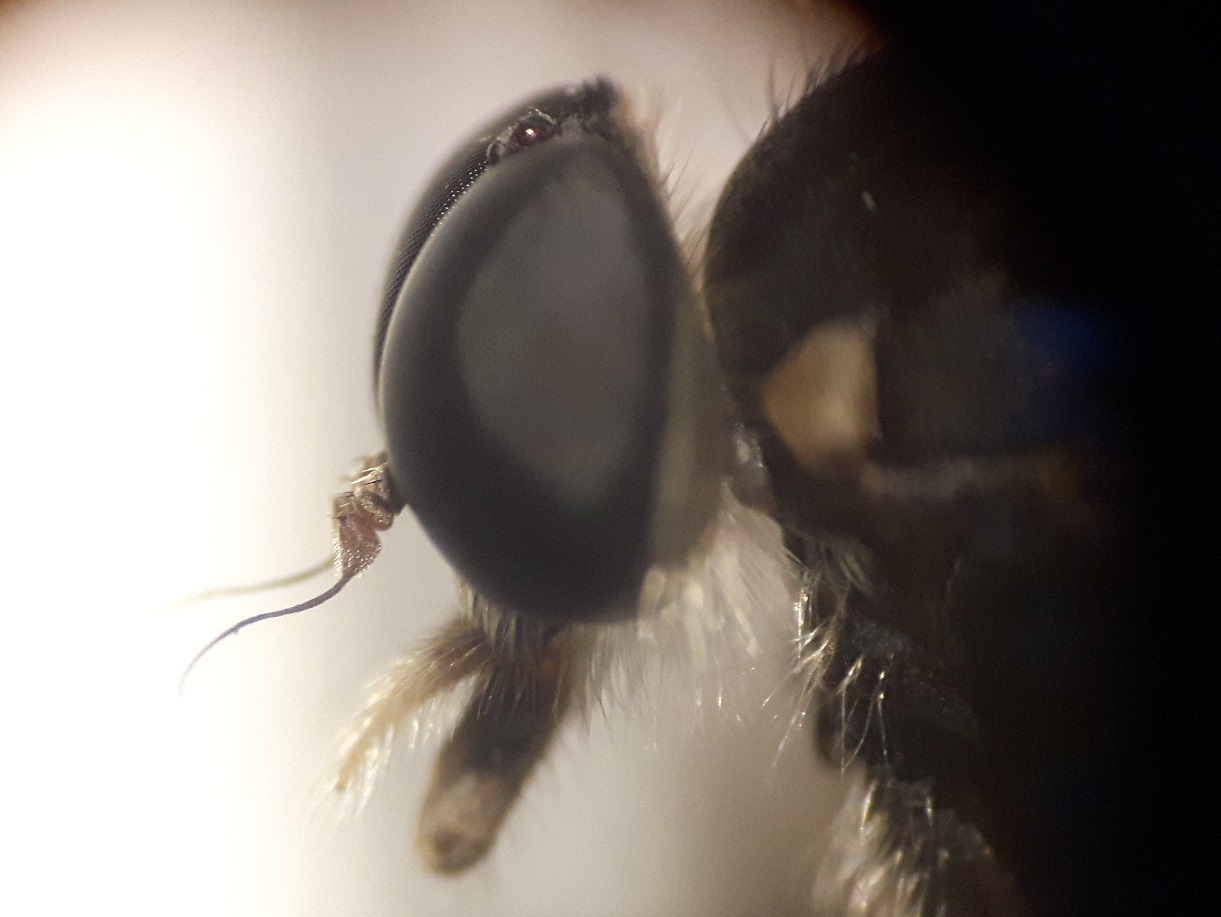
Profile shot of a fancy modified antenna

Step 3. What on earth is going on with that crack in your face?

And so on and so forth, until the key comes out at a family name.

Barbara and John run several workshops each year for the Dipterist's Forum, a group dedicated to the study and preservation of flies. They also run a busy consultancy together while volunteering their time to write papers and, of course, identify flies. Considering they are also married, I reckon this pair could have a side-line in writing couple counselling guides.


