Showing posts with label Song thrush. Show all posts

Friday, 14 December 2018

Early Winter Bird Survey - North West Zone 12/12/18


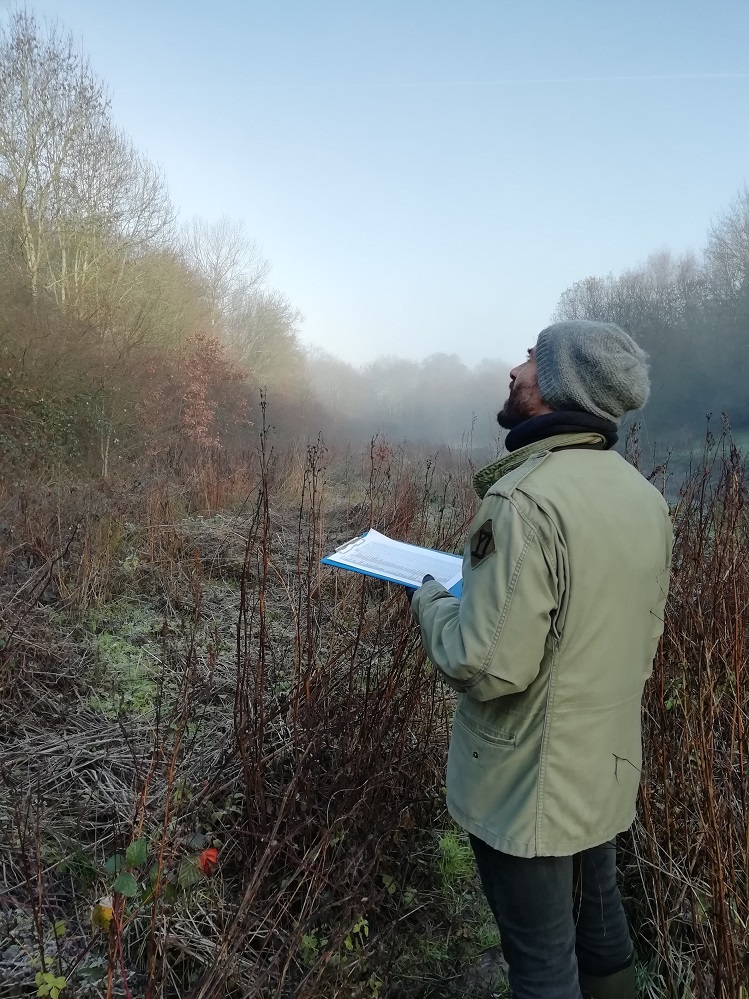
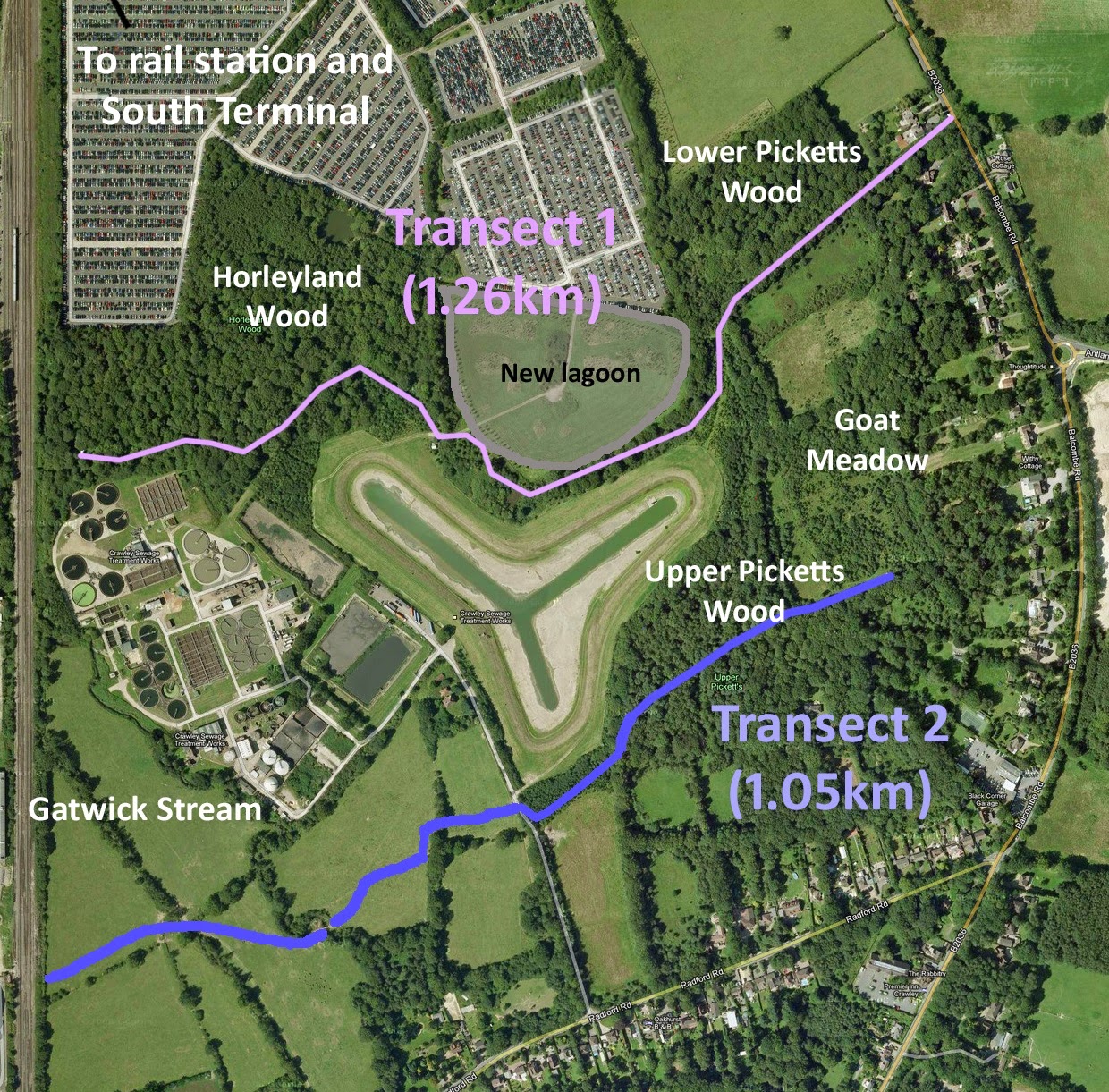
This morning was the start of a real cold snap here in Sussex, which always seems to tie in with our North West Zone bird survey transect. Tom F. and I set off along the northern side of the airfield fence a little after sunrise, giving the birds some time to get moving and active. Tom commented right away that this was a spookily quiet morning...


A group of Meadow Pipits are typically the first birds we come across, bouncing along the airfield fence. A Robin and several Dunnocks called sporadically, hidden away along the banks of the River Mole. Our first red-status species was a Song Thrush, giving it's subtle 'tseep' alarm call as it fled, nipping down into the river bank vegetation.


Down on the floodplain it truly felt bone-achingly cold. The reed beds seemed devoid of life, then a fiesty Wren struck up an alarm call as it faced us off from the top of a reed. Finally, a Reed Bunting called, although only faintly and with no replies forthcoming. It really felt like the birds hadn't got out of bed yet.


Further along the floodplain, we caught the distant calls of Water Rails. These secretive birds seem to be more vocal in winter, and their call is highly weird. If you happen to be standing right next to one when it sounds off, it's pretty alarming!


Over to the scrub west of Brockley Wood, a few Blue Tits and Long-tailed Tits were foraging together on the woodland edge. A sole Green Woodpecker headed off calling and a group of Wood Pigeon broke from the trees. Over in woodlands, a distant Nuthatch called.


This sheltered patch of grassland is one of my favourite spots in summer, dense in long herbaceous vegetation and absolutely humming with invertebrates. In winter however this tends to be the favourite patch of another highly-secretive and red-status bird; the Woodcock. We flushed one from the low scrub; its low, whirring flight really does give the appearance of a giant bat. 


Poking our heads into the north of Brockley Wood, we were hoping for some Redwing activity, however the flocks were conspicuously absent from the site this morning. The collective alarm calls of  Blackbird, Magpie and Wren indicated the presence of an avian predator, likely a perched-up Tawny Owl or Sparrowhawk. Whatever it was then moved off, as the alarm calls rapidly followed it through the wood.


Our final section of grassland along the River Mole turned up two Common Snipe, which had been well hidden in the rushes. One put on an amazing display, flying a wide loop over the environment bund and then skimming low past us at about waist-height. This whole transect was again peculiarly quite, and surprisingly one of the most numerous birds was Bullfinch; we counted a total of 6.


At the very end of the transect we had a buzz of excitement in the form of a perched Sparrowhawk, apparently causing upset with the resident Ring-necked Parakeets. It casually took off over the trees, leaving in its wake a string of songbird alarm calls.


Final species count = 34

Common name
Species
Blackbird
Turdus merula
Blue Tit
Cyanistes caeruleus
Bullfinch
Pyrrhula pyrrhula
Buzzard
Buteo buteo
Carrion Crow
Corvus corone
Chaffinch
Fringilla coelebs
Coal Tit
Periparus ater
Dunnock
Prunella modularis
Goldcrest
Regulus regulus
Goldfinch
Carduelis carduelis
Great Spotted Woodpecker
Dendrocopos major
Great Tit
Parus major
Green Woodpecker
Picus viridis
Grey Heron
Ardea cinerea
Jackdaw
Corvus monedula
Jay
Garrulus glandarius
Long-tailed Tit
Aegithalos caudatus
Magpie
Pica pica
Mallard
Anas platyrhynchos
Meadow Pipit
Anthus pratensis
Moorhen
Gallinula chloropus
Nuthatch
Sitta europaea
Reed Bunting
Emberiza schoeniclus
Ring-necked Parakeet
Psittacula krameri
Robin
Erithacus rubecula
Siskin
Spinus spinus
Snipe
Gallinago gallinago
Song Thrush
Turdus philomelos
Sparrowhawk
Accipiter nisus
Treecreeper
Certhia familiaris
Water Rail
Rallus aquaticus
Woodcock
Scolopax rusticola
Woodpigeon
Columba palumbus
Wren
Troglodytes troglodytes

Sunday, 1 March 2015

Late winter bird surveys 2015

February 12th - North West Zone


Despite dreary conditions it was a cheerful group of us who met in the morning, just north of the airfield. Traipsing through the wet and boggy grasslands, right away we picked up the drumming of a Great Spotted Woodpecker and the raucous cries of a Ring-necked Parakeet, a recently naturalised species which is well established in Reigate and spreading southward. 

Ex-arable grasslands west of Brockley Wood; thanks to their inaccessibility and 
the airport's boundary, they have been largely left undisturbed.


The hearty tune of a secretive Song Thrush could be heard emanating from the hedgerows, with their distinctive repetitive style which you can clearly see in this sonogram...

In fact, they were in all the bloody hedgerows! It was like Song Thrush City, with exceptionally high numbers possibly due to migrants passing through on their way to their summer homes.
   Wandering through the Solar Panel field, we flushed four Common Snipe with their characteristic erratic flight pattern. They even left us a calling card...

Common Snipe smatterings

Where the Mole begins to meander, we stood high on the track and observed two large shapes winging their way towards us... a wandering pair of Greylag Geese are an usual sighting on our surveys. Looking in the deeper wheel ruts of the rough track, tell-tale movements gave away the presence of Common Frogs gathering to spawn. Every year they take a gamble laying eggs here, but sometimes the froglets do make it! 


Wishing for a Water Rail in the reedbeds - no such luck

There is a great mix of habitats in one small area, so we can pick up woodland, scrubland and wetland species. Long-tailed Tits, Moorhen, Jackdaws and a Green Woodpecker were all in close proximity, along with the same group of Common Snipe we had just seen earlier. A pair of Bullfinch were piping loudly from the scrub...

If you look really, really closely, it's definitely a Bullfinch

Still getting to grips with this camera.

The River Mole is at a relatively low level for this time of year

Towards the end of our transect we saw a Little Egret and Grey Heron taking flight. I've seen this duo hanging around quite the past few weeks, one might be following the other around in order to find the best fishing spots. They always keep a respectful distance from each other though.

Little Egret in the foreground, Grey Heron at the back

Either a Great Tit spontaneously combusted, or a Sparrowhawk just had breakfasted

At the end of the transect near Povey Cross, we picked out a few more Ring-necked Parakeets perched up close to a group of Magpies. I had another go with the camera....


Getting better!

NWZ total: 29 species

1
Blackbird
Turdus merula
2
Blue Tit
Cyanistes caeruleus
3
Bullfinch
Pyrrhula pyrrhula
4
Carrion Crow
Corvus corone
5
Chaffinch
Fringilla coelebs
6
Collared Dove
Streptopelia decaocto
7
Dunnock
Prunella modularis
8
Goldcrest
Regulus regulus
9
Goldfinch
Carduelis carduelis
10
Great Spotted Woodpecker
Dendrocopus major
11
Great Tit
Parus major
12
Green Woodpecker
Picus viridis
13
Greenfinch
Carduelis chloris
14
Grey Heron
Ardea cinerea
15
Jackdaw
Corvus monedula
16
Jay
Garrulus glandarius
17
Little Egret
Egretta garzetta
18
Magpie
Pica pica
19
Mallard
Anas platyrhynchos
20
Moorhen
Gallinula chloropus
21
Nuthatch
Sitta europaea
22
Redwing
Turdus iliacus
23
Reed Bunting
Emberiza schoeniclus
24
Ring-necked Parakeet
Psittacula krameri
25
Robin
Erithacus rubecula
26
Snipe (Common)
Gallinago gallinago
27
Song Thrush
Turdus philomelos
28
Wood Pigeon
Columba palumbus
29
Wren
Troglodytes troglodytes
Greylag Goose Anser anser (fly-over)

February 13th - Land East of the Railway Line


A brand new dull wet day, we reversed the usual direction of our transects and began instead on the Gatwick Stream floodplain. This area has been re-profiled on a large scale as part of a flood alleviation scheme, so now consists of extensive wet grassland habitat,


The first species to greet us were Chaffinch, Coal Tit and Green Woodpecker. A lonely Meadow Pipit flew overhead followed closely by a Pied Wagtail.


A series of large Oak trees can be found on islands of raised land, ringed off with post and rail fencing. They make a perfect perch point for this flock of around 20 Linnets...


As lovely as the Linnets were, it was something else which got us excited this morning...


Tom F. had spotted a pair of Little Owl perched up in the Oaks! Quick... Photo photo photo!

Bah. 

Yet again I was no where near quick enough with the camera settings, so this distant shot was all I got before they nipped off. Little Owl is a new species for our surveys at Gatwick and I am yet to see one close up. This pair were being very covert and quiet, but as it is ridiculously cute here's a recording of their calls from the Xeno-canto website...


The tracks of different birds and mammals stood out clearly in the bare mud, telling us which who had recently passed by:

More than one Red Fox

Roe Deer

We left the floodplain and entered the woodlands, where we picked up a roving flock of Blue Tit, Great Tit and a pair of Goldcrests. Further into the woods and the outskirts of Goat Meadow, we caught the song of a lonely Coal Tit and we glimpsed a sneaky Tree Creeper.


Craning our necks to look high up in the canopy, the swaying Scots Pines made us feel rather sea sick...


Which was about when my camera battery finally gave up after having taken many bad owl photos.
   Our transect then ended at the western edge of Horleyland Wood, finally bringing us Carrion Crow, Woodpigeon, and the incessant calls of a Great Spotted Woodpecker.

LERL total: 27 species

1
Blackbird
Turdus merula
2
Blue Tit
Cyanistes caeruleus
3
Carrion Crow
Corvus corone
4
Chaffinch
Fringilla coelebs
5
Coal Tit
Periparus ater
6
Common buzzard
Buteo buteo
7
Goldcrest
Regulus regulus
8
Goldfinch
Carduelis carduelis
9
Great Spotted Woodpecker
Dendrocopus major
10
Great Tit
Parus major
11
Green Woodpecker
Picus viridis
12
Jackdaw
Corvus monedula
13
Jay
Garrulus glandarius
14
Linnet
Carduelis cannabina
15
**Little Owl
Athene noctua
16
Magpie
Pica pica
17
Mallard
Anas platyrhynchos
18
Meadow Pipit
Anthus pratensis
19
Pied Wagtail
Motacilla alba
20
Redwing
Turdus iliacus
21
Robin
Erithacus rubecula
22
Song Thrush
Turdus philomelos
23
Starling
Sturnus vulgaris
24
Stock Dove
Columba oenas
25
Treecreeper
Certhia familiaris
26
Wood Pigeon
Columba palumbus
27
Wren
Troglodytes troglodytes
**New species to this survey

Many thanks to Tom F., Bethan, Sian and Donald for your help on these surveys!