Going on how busy February has been around this place, my fears about the impending loss of my social life this spring are well founded. Here are a load of photos summing up what we've been up to this past month:
Scrambling to the finish: coppicing and glade clearance with JS Agriculture in
Lower Picketts Wood
We have opened up our glade close to this beautiful ancient Hornbeam
The spring firsts have already appeared and the online recording is picking up - Red Admiral butterflies and various Bumblebee species have been spotted also many birds have begun nesting. Snow Drops, Wild Daffodil and Dog's Mercury are all well underway in the woodlands, too.
Dog's Mercury - early woodland ground flora
Hazel catkins with their tiny pinkish red flowers
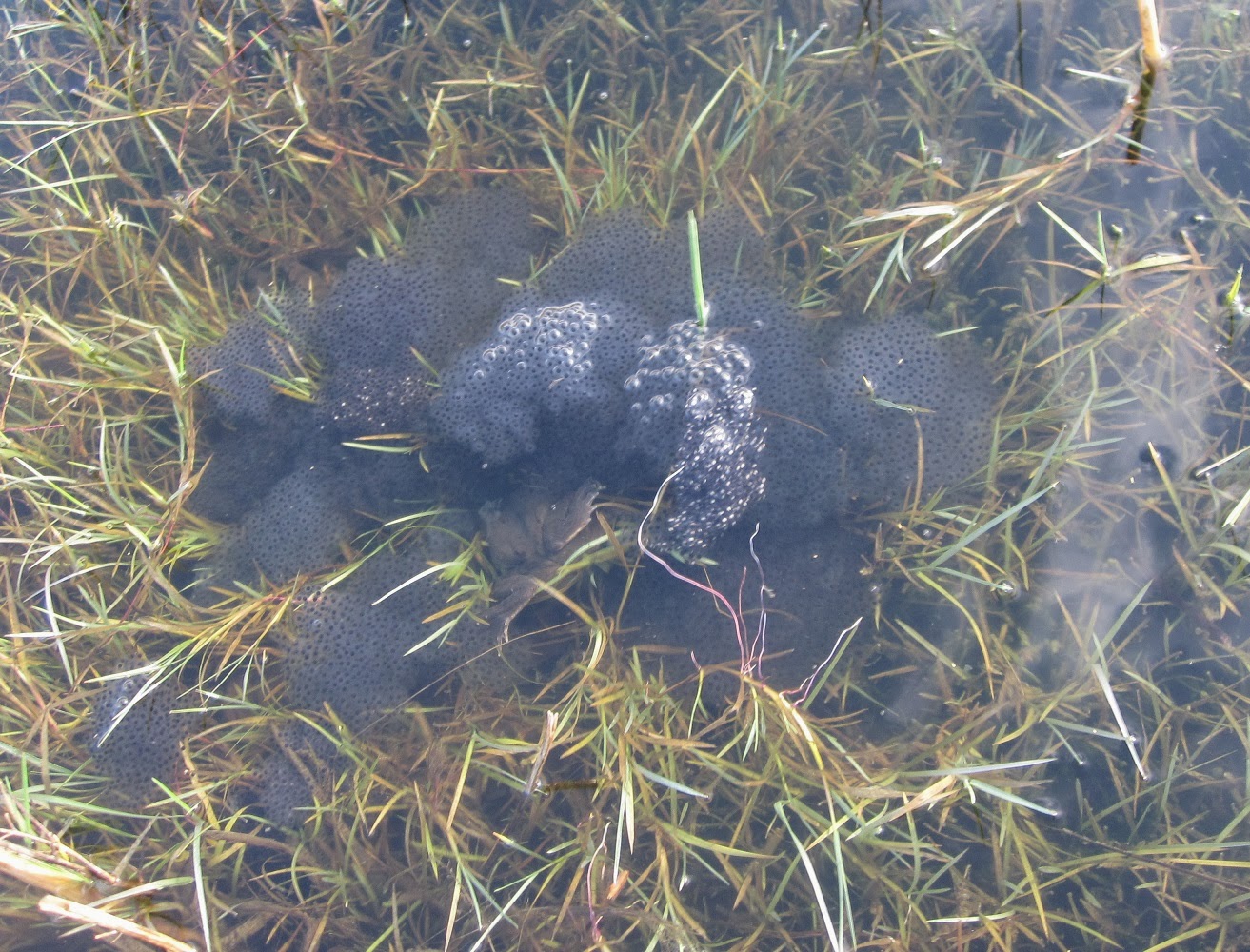
Amphibians have been quick off the mark this year and I saw our first lot of spawn much earlier this month.
Frog spawn in temporary pools in the grasslands; it might mean fewer predators but is still a risky practice
Common Toad hiding out under a reptile refugia
Tackling the scrub in Goat Meadow - West Sussex County Council Rangers and volunteers
We have now removed a significant amount of the encroaching Willow and young Oak trees which have been threatening our lovely wet meadow. Thanks to the WSCC guys Darren, Tom and their volunteers for coming out to do this; I think being whipped by the small Willow saplings and vengeful Hawthorn scrub might appear on future risk assessments!
Grass Snake hangout spot after a re-furb - now a fantastic Grass Snake boulevard strip of
willow brashpiles and logpiles.
If you ever come out to volunteer with WSCC, you will note their passion for fine filter coffee and biscuits; also how they pack everything away with military precision...
Quite literally. They are using army surplus ammo boxes!
I recently made up a display board on Gatwick for some biological recorders seminars, where local conservationists and naturalists congregate to rub shoulders, hear about new projects and updated wildlife records. These are some of my best pics of 2013.
Sorting through the malaise trap invertebrate samples is fun but starting to feel endless - some of my nearest and dearest have also been coerced into helping!
Easy to miss (and to get poked in the eye)
During our Winter Thrush surveys, I finally found some direct evidence of the Brown Hairstreak butterfly on site, in the form of these tiny yet distinctive eggs on the Blackthorn scrub.
Perfectly round with coral-like patterning - the caterpillar which hatches out of this will soon be munching on some tasty fresh Blackthorn leaves
Some extra Dormouse boxes were installed by Tom S. of Gatwick Greenspace Partnership and Gatwick's Environment Team. It seems however that they are not protected from random members of public with marker pens... Everyone's a comedian.
We got our first definite record of Badger on site, perhaps a year or so too late! Hopefully it wont be long now 'til we capture a live one on camera.
Tree-climber Allen from JS Agriculture assisted Martyn of Surrey Bat Group with moving old bat boxes from dizzying heights to more suitable locations.
Before moving them, Alan opened each of the boxes to check they were empty, and was pleasantly surprised to come across these occupants...
According to Martyn, it is quite unusual to find the Brown Long-eared bats in this type of bat box (a 1FF Schwegler, which to me sounds like some kind of handgun). He had been hoping to get a confirmed sighting of this species onsite here for a while, although we have picked up their calls in previous bat detection surveys with Laurie.
Definitely one of the cuter bat species; this dosey couple were left alone to continue their napping
Alan was careful not to disturb them while taking these photos, but not much chance of that as they were in torpor (a sort of semi-hibernation). Also, in a few of these boxes were strips of honeysuckle bark... Possibly, some sneaky dormice are operating at height!
An old birds nest we fished out of a bat box with a suspicious amount of Honeysuckle
The most abundant insect of the month award goes to the 7-spot Ladybird,
lots can be found hidden under bark and leaves
Finally, our late winter bird surveys have pretty much become spring bird surveys with Chaffinch, Skylark, Reed Bunting and many others already in song. The Redwing are very loud at the moment with their pre-migration chatter, which I still think sounds like a flock of Siskin. Small mammals such as Short-tailed Voles and Common Shrews are abundant and active at the moment, as the mild winter has been easy on them. That reminds me of last autumn and how I got on the bandwagon for predicting a very harsh winter - that darn Eddard Stark got it completely wrong.