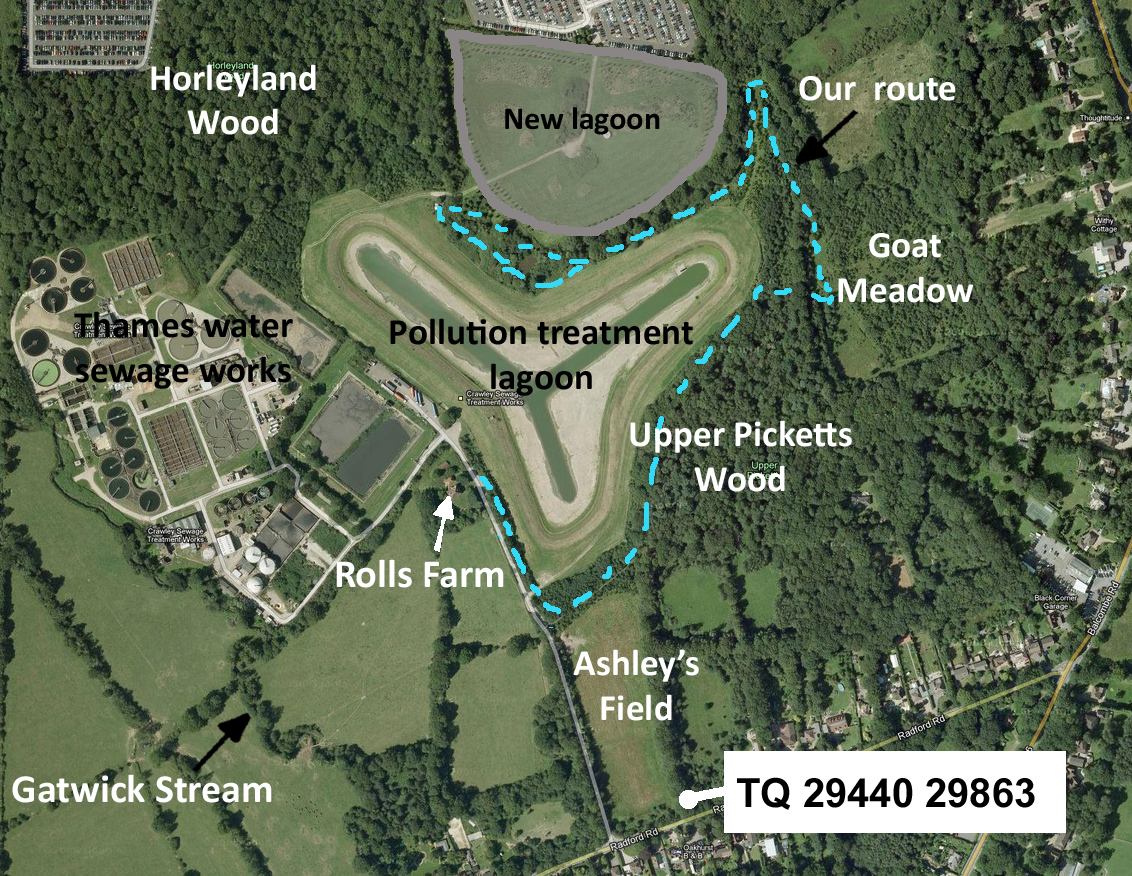
Last Friday, Sir Jacob of Everitt, Warden of Horsham returned to Gatwick with his trusty moth trap and his (mostly trusty) generator. We had high hopes for some excellent mothing conditions after such a warm and humid day.

A massive column of midges above our heads kept us company
We made sure the generator and trap were up and running before the sun set, giving us time to explore the grass and scrubland habitat of Goat Meadow in twighlight.

'Dusking' for moths

Eudonia pallida - a common micromoth species

Meshweaver Spider (Dictyna arundinacea). It looks like it's covered in cowhide

Burnet Moth caterpillar, not far off pupating

Common Crab Spider (Xysticus cristatus), female
The air temperature was still pretty warm, but even then, while checking under one of the reptile refugia I wasn't expecting this incredible sight...

Grass Snake fest: five large adults (around a meter long) and one rather small fella all huddled up together
That's definitely the most snakes I've seen under one refugia! It's also right by our new and improved Grass Snake brash and log pile, so we must be doing something right.
Back to the trap to see how we're getting on...
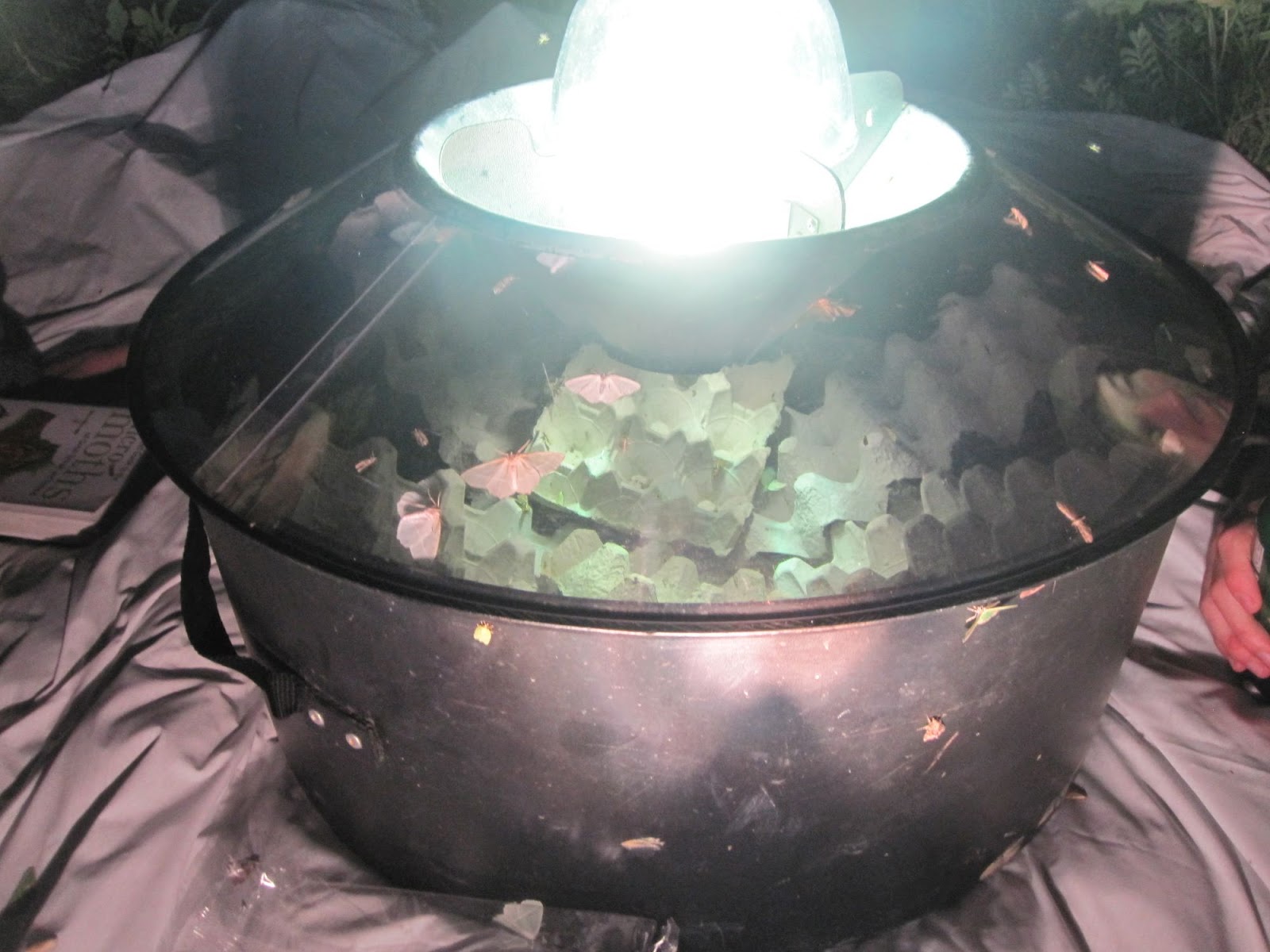
Jake's trap: a large actinic light bulb and a plastic bucket filled with egg boxes for the moths to settle on
The great thing about moths is not only their incredible diversity, but their aptly descriptive names which make them more memorable. They are well worth surveying for as they can indicate habitat quality; which food-plant species are thriving, whether there is a good woodland/grassland structure, if air pollution is high, or if pesticides are being used. The cool and windy weather can really put them off, but luckily tonight was mild and the moths began arriving at the trap before it was even fully dark...

Light Emerald (Campaea
margaritata)

Blotched Emerald (Comibaena
bajularia), but renamed 'Carlsberg Moth' by us

Coxcomb Prominent (Ptilodon
capucina), side view

Coxcomb Prominent (Ptilodon capucina). It's like a tiny, fluffy Lion!
We left the trap to carry on its work and went searching for flowering shrubs in the torch light, checking for nectar-loving species. We hadn't gone far before we stumbled across something else pretty awesome!

A funky green LED, out in the middle of the grassland

Photo taken with the camera flash on...
This is a female Glow Worm (Lampyris
noctiluca). It is not a worm at all but actually a type beetle, belonging to the Firefly class of insects (which incidently is my favourite class of spaceship). The end of her abdomen glows through bioluminescence, which is basically the light produced through an internal chemical reaction. I've regularly been finding Glow Worm larvae under the reptile refugia, even males in a moth trap, but this was my first glowing adult female!

Scorched Wing (Plagodis
dolabraria), genuinely looks like a scorched piece of papery bark...
I guess it has its reasons
Back to the moth trap and soon it's time to start collating all the species. A comprehensive species tick-list makes things a bit easier with one person calling out the names and another recording.

Peach Blossom (Thyatira batis)

Peppered Moth (Biston betularia)

Moth accessories must be worn at all times
Jake says we got around 67 species from just one trap, which is not a bad haul. In fact, it was enough that some of them even decided to hitch a ride home in my rucksack; a Large Yellow Underwing flapping about your face while you're driving isn't ideal.
Moths are blooming fantastic things when looked at more closely, so here are the profile pics of all 67 species I have diligently photographed...
Moths are blooming fantastic things when looked at more closely, so here are the profile pics of all 67 species I have diligently photographed...

Clouded Silver (Lomographa temerata)

Beautiful Golden Y (Autographa
pulchrina)

Common Swift (Hepialus
lupulinus)

Large
Fruit-tree Tortrix (Archips
podana)
Even more moths and invertebrates to come this month!