(A continuation from a previous blogpost on monitoring of the fenceline apertures and movements of wildlife.)
An old broken fenceline has proved an important passing point for a variety of mammals, including Badger, Fox, Rabbit and Grey Squirrel. We left trail cameras in two locations to see how often the gaps at the bottom of the fence were being used.
Badger (Meles meles)
Grey Squirrel (Sciurus carolinensis)
Red Fox (Vulpes vulpes) with prey, perhaps a Jackdaw
A fox nibbling a slug. Later on it returned to eat the whole thing!
Pair of Red Fox
Where the new section of fence has been installed, apertures purposely created for wildlife are now being regularly used by Foxes and Badgers. Not all of the footage came out so well, but we did get a few niceties...
Pair of Badgers
A dog Fox shows his approval
Here's a final clip of a young Roe Deer. They grow up so fast!
Roe Deer (Capreolus capreolus) kid and doe
A comparison between the two sites over 7 days of monitoring:
Site 1 (old fence)
Red Fox = 8 passes
Badger = 2 passes
Site 2 (new fence with man-made aperture)
Red Fox = 7 passes
Badger = 5 passes
Grey Squirrel = 2 passes
Back in May I left a trail camera in the woodland where a new fence line had been recently installed. Part of the work included leaving apertures in the fence wide enough for foxes, badgers and other mammals to pass through. This can result in wildlife being funneled through to certain spots, making it a very useful place to put a trail camera.
Below are a selection of clips and the final result is at the end of the post.
Red Fox (Vulpes vulpes)
European Rabbit (Oryctolagus cuniculus)
A male Roe Deer (Capreolus capreolus) notices the camera for the first time
Second male Roe Deer (slightly different tines on his antlers)
Once the wildlife gets used to the presence of the camera, more natural behaviour starts to come out...
Fox carrying food
Male Roe Deer chasing each other
This particular Fox looks like he might be a new visitor, as he is nervous of the gap in the fence.
Lovely to see a family group of Roe Deer; the young (called kids) will only have been born sometime in the past couple of weeks.
It looks as if this female Roe Deer might be being courted by the male. The strange breathing sound is his communicating. A lot more creepy than attractive in my opinion.
The male Roe Deer were chasing each other up and down the fence several times per day, and this lone female on the other side was obviously interested...
An hour later, and she solved the problem.
Total number of movements through the aperture over the 6 days (likely an underestimate as not every movement may have been recorded):
A selection of wildlife commonly found on the biodiversity sites, landside at Gatwick Airport.
January
Roe Deer - Capreolus capreolus
Our largest mammal species on site. I've also seen Fallow Deer very closeby, but never actually within our site boundaries.
February
This isn't a fungus, but is actually a type of bacteria called Nostoc commune; a colonial species of cyanobacteria.
Cyanobacteria are thought to have converted Earth's early atmosphere into an oxygen-rich one. It occurs extensively on the bare clay soil around the North West Zone and from a distance resembles squished rabbit poops.
March
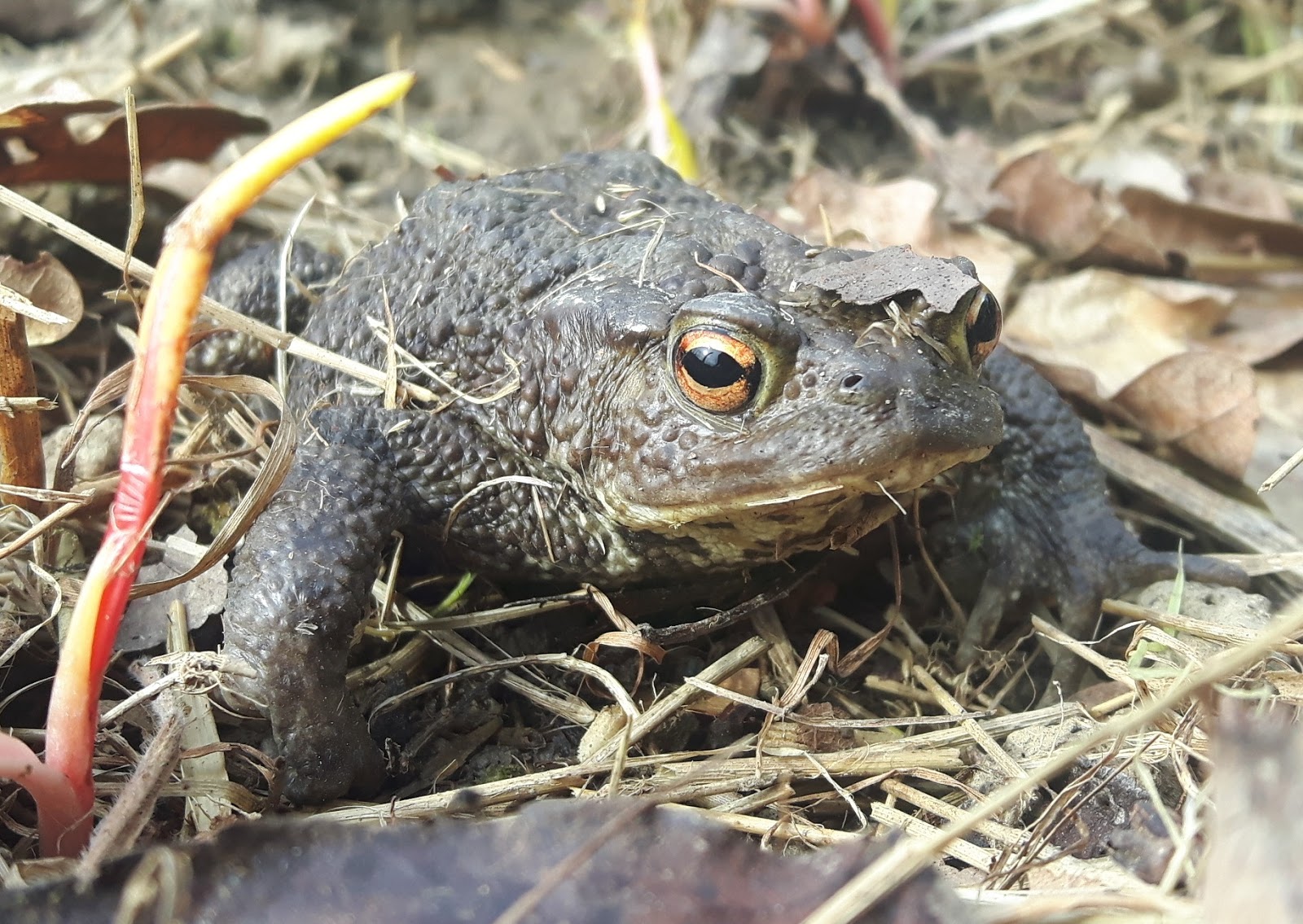
Common Toad - Bufo bufo
We often find Toads under the reptile matts long before the Grass Snakes wake up from their winter sleep. Breeding occurs in the ponds and within the reedbeds along the River Mole. Unlike frogs, Toads lay their eggs in long strings.
Found throughout the woodlands at Gatwick, this ancient woodland indicator species crates a heady scent on warm spring days.
May
Not a mirror image, but in fact a mating pair of Eyed Hawk-mothsSmerinthus ocellata, spotted by Tom Forward along the River Mole grasslands.
June
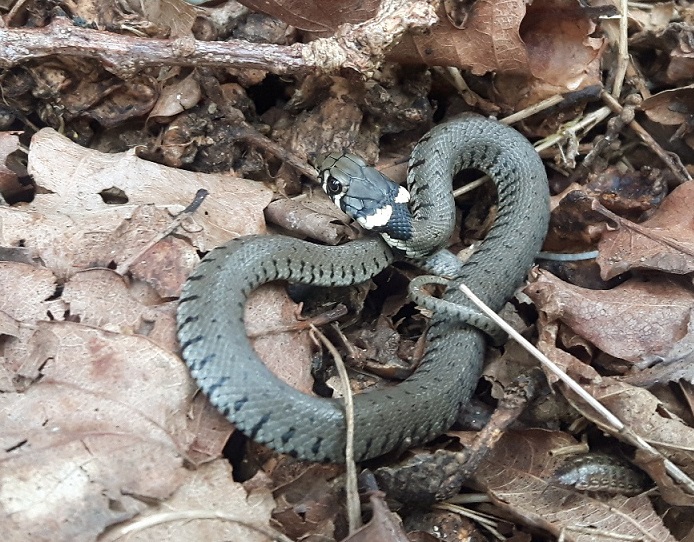
Grass Snake - Natrix helvetica
Our most common reptile species at Gatwick; widespread across both sites but they are particularly found of the grassy margins of scrub areas.
July
Platystomos albinus - (a type of fungus weevil)
This is a Nationally Notable B species, found in a well-rotted pile of oak and willow logs. It may not seem obvious from the pic, bit this little dude measured only about 1cm from nose to rear! (Thanks to Graeme Lyons for correcting my I.D on this one).
August
A colony of these Willughby's Leafcutter Bees (Megachile willughbiella) set up shop in a bee hotel constructed by Tom Simpson's volunteers.
Leafcutter bee nest
September
Harvest Mouse - Micromys minutus
One of our smallest mammal species, these tiny mammals weigh in at around 5g. Their nests
are commonly found in the reed beds along the River Mole.
October
Brown Long-eared bats-Plecotus auritus
Arguably the cutest bat species on site, they often utilise the bat boxes in the Land East of the Railway Line. In order to open and check bat boxes, a licence holder must be present, which in our case is ex-air traffic controller Martyn Cooke.
November
Eyelash Cup Fungus-Scutellinia scutellata. Upper Picketts Wood
These tiny and beautiful fruiting bodies are commonly found on very damp, well-rotted wood.
December
Tawny Owl- Strix aluco
It just so happens that Tawny Owls are the subject of a current BTO survey, which members of public can also join in on.
Happy New Year everyone and all the best for 2019!!