Showing posts with label Glow Worm. Show all posts

Wednesday, 5 June 2019

Gatwick Goes Wild 2019


Every year during May half term Gatwick Goes Wild as the Greenspace Partnership hosts a week of events to help local people learn about wildlife and find new ways to enjoy their greenspaces.

This year’s activities began with a Family Holiday Club in the Gatwick woodlands near Crawley. Our guests started a fire with fire steels and produced a tasty cordial from the abundant elderflower along the woodland edge.
Collecting Elderflower

Later, we learnt all about the local trees; collecting leaves for ‘hapazome’ leaf prints and turning willow into charcoal for pencils. After lunch, we wandered across the meadow and were lucky enough to spot a Gatwick Grass Snake.

Searching for snakes

Wet weather for Wednesday’s guided walk along the River Mole meant only the hardiest nature enthusiasts made it along. The wildlife took cover but one sharp-eyed girl spotted several tiny species sheltering from the rain. Among those identified were Wandering Pond Snails, a Short-fringed Mining Bee, froghopper larvae, soldier beetles, Glow Worms and even a Buff-tailed Bumblebee.


The exclusive invites to the Butterfly Ball and Grasshoppers Feast, were gratefully accepted by both insect and beast (especially of the human kind). The moth trap was a real highlight and the ever-popular Poplar Hawk-moth stole the show by getting up-close with some of our guests.

Can you spot the Poplar Hawk-moth?


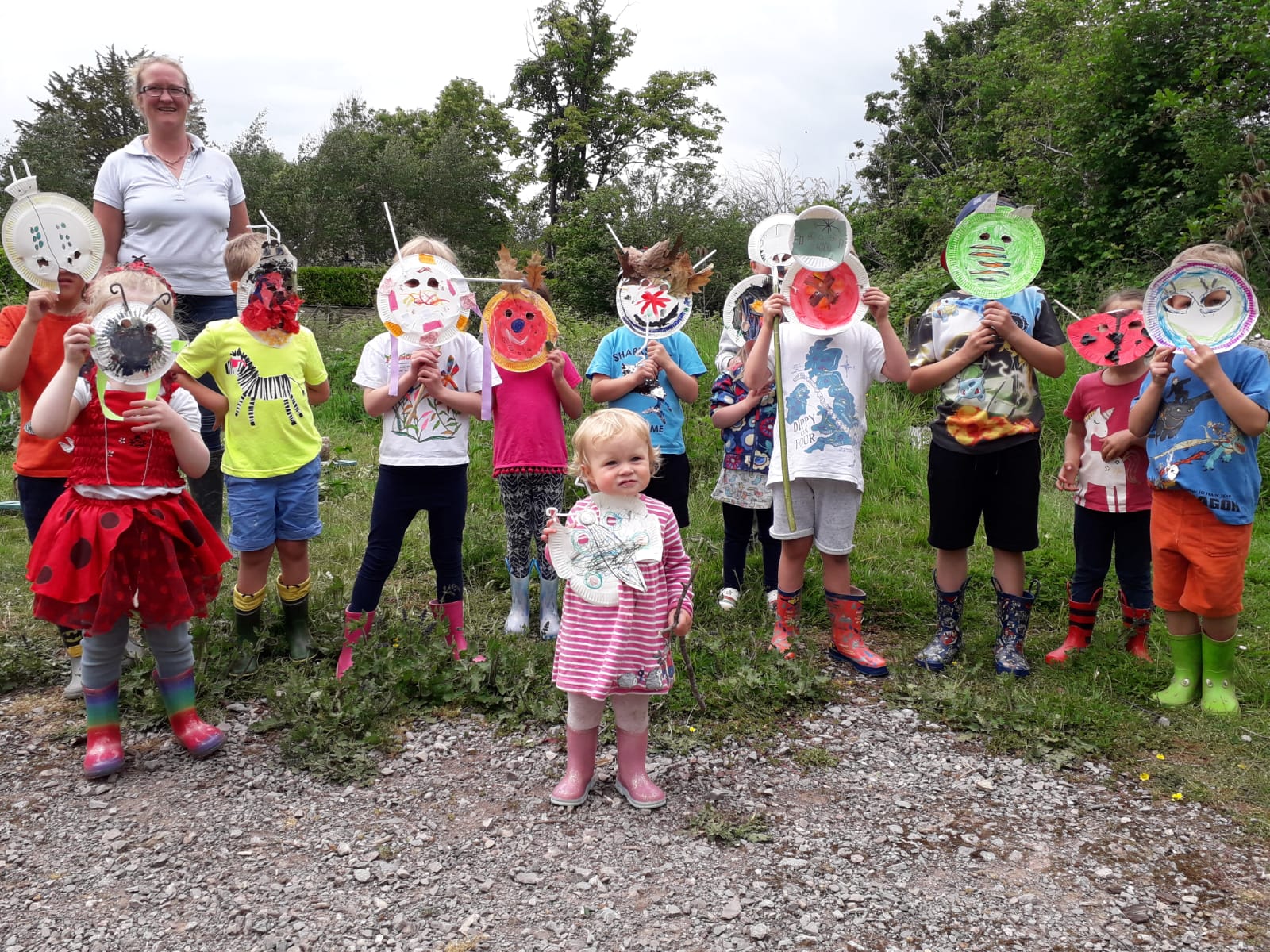
We headed across the meadow, where Slow Worms, Grass Snakes and demoiselles joined the party, before putting pond nets into the water to see if the aquatic invertebrates had received their invites. No ball is complete without a masquerade mask and an impressive array were crafted that afternoon.    


It was back to the River Mole again on Friday evening when Martyn Cooke of the Surrey Bat Group brought his expertise (and an array of exciting equipment) to help spot some elusive winged mammals after dark. Whiskered Bats were seen emerging from their roosts on an infrared camera, Noctules were picked-up on the bat detectors calling loudly over the floodplain and Common Pipistrelles swooped on their prey directly overhead.


Getting ready to track some bats

Our last day and the first day of 30 Days Wild saw our Mammal Detectives following tracks and soon sniffing out ten Longworth traps set in the Gatwick Woodlands. After freeing four innocent voles from the humane traps, the trail continued. Badgers took the bait and left their mark in their latrines and foxes posed in front of the trail cams.


Meeting a vole and getting a closer look at some foxes on the trail cam (below)

Once in the woods our detectives dissected owl pellets, made some tracks of their own and carefully crafted critter shelters for our woodland mammals.


This year’s Gatwick Goes Wild was the best yet with more people, more wildlife and even more fun. We would like to thank everyone who came along to join in and all the staff and volunteers who helped to put on a wild half term.


Why wait another year to ‘Go Wild’ when the Gatwick Greenspace Partnership have plenty of events running throughout the year?
https://sussexwildlifetrust.org.uk/gatwickgreenspaceevents


Next up is the Gatwick Wildlife Discovery Day on the 22nd June – a bioblitz event for all the family where you can help us to identify and record as much wildlife as possible in 24hrs at the Gatwick Aviation Museum.

Thursday, 10 September 2015

Dark Knights at Gatwick

Bat activity transect C, Land East of the Railway Line, July 11th 2015

It has felt like a good year for bats around our biodiversity sites, with lots of exciting acitvity monitoring by Laurie Jackson, Martyn Cooke and volunteers from Surrey Bat Group. We've been using 3 different survey methods here: activity surveys (walking set routes called 'transects', with bat detectors and recording equipment); trapping surveys (with Martyn's harp traps, loud speaker and bat call software system); and box checks (annual checking and cleaning of our woodland bat boxes).

Powerline Ride at dusk, Horleyland Wood

Although rarely seen, bats actually make up around a third of UK mammal species and so are a significant players in our ecosystems. Also being insectivores, they are directly affected by any crashes in invertebrate populations and are great indicators of our countryside's overall health.

Bat box recorder and logger 

Bat logger live sonogram image

This recording equipment is all a bit beyond me, but Martyn Cooke (who also works in air traffic control at Gatwick) loves his tech and is a dab-hand at collating and translating this data.

Measuring the forewing of a Common Pipistrelle.
(To handle bats, you must be trained and hold appropriate licenses.)

Weighing a Pip in a cup

The biometric data collected includes the species type (some can only be identified by close examination in the hand), weight, sex, rough age, breeding condition and general health of the individual. I need to check again with Martyn, but I think we are up to 10 different species of bat recorded at Gatwick.

Assessing wing joints and bone ossification to gauge the age.

This health check might look pretty intrusive for a bat, but they are only kept for a few minutes before they are released back out into the night.

Common Pipistrelle (Pipistrellus pipistrellus)

Brown Long-eared (Plecotus auritus)

Bats face many threats due to extensive habitat loss and fragmentation from development, as such they are all protected by UK and European law. You might associate bats with roosting happily in buildings, but they really need natural features such as grasslands, hedgerows and woodlands to hunt and forage in. The monitoring and conservation efforts led by organisations such as Bat Conservation Trust are of vital importance to conserve the UK's bat species. 

Get out of here, you.

Its not always deemed socially acceptable to be out in the woodlands after dark. but this bat work gives us special licence. Its also great to see and hear all the other wildlife out and about our biodiversity areas on warm summer evenings:

Light Emerald Moth (Campaea margaritaria)

Glow Worm (Lampyris noctiluca), female

Photo with flash reveals that a Glow Worm is a large beetle

We often hear the strange hoarse squeaks of juvenile Tawny Owls, which sound like their voices are breaking...
Plus a rather impressive (and one of my favourite) species we have resident in our woodlands...

Araneus angulatus male, a rare spider in the UK, restricted to the southern counties

To learn about monitoring bats in your area, why not check out your local bat group.

Tuesday, 10 June 2014

Magnificent moths and more


Last Friday, Sir Jacob of Everitt, Warden of Horsham returned to Gatwick with his trusty moth trap and his (mostly trusty) generator. We had high hopes for some excellent mothing conditions after such a warm and humid day.

A massive column of midges above our heads kept us company

We made sure the generator and trap were up and running before the sun set, giving us time to explore the grass and scrubland habitat of Goat Meadow in twighlight.

'Dusking' for moths

Eudonia pallida - a common micromoth species

Meshweaver Spider (Dictyna arundinacea). It looks like it's covered in cowhide 

Burnet Moth caterpillar, not far off pupating

Common Crab Spider (Xysticus cristatus), female

The air temperature was still pretty warm, but even then, while checking under one of the reptile refugia I wasn't expecting this incredible sight...

Grass Snake fest: five large adults (around a meter long) and one rather small fella all huddled up together

That's definitely the most snakes I've seen under one refugia! It's also right by our new and improved Grass Snake brash and log pile, so we must be doing something right.
   Back to the trap to see how we're getting on... 

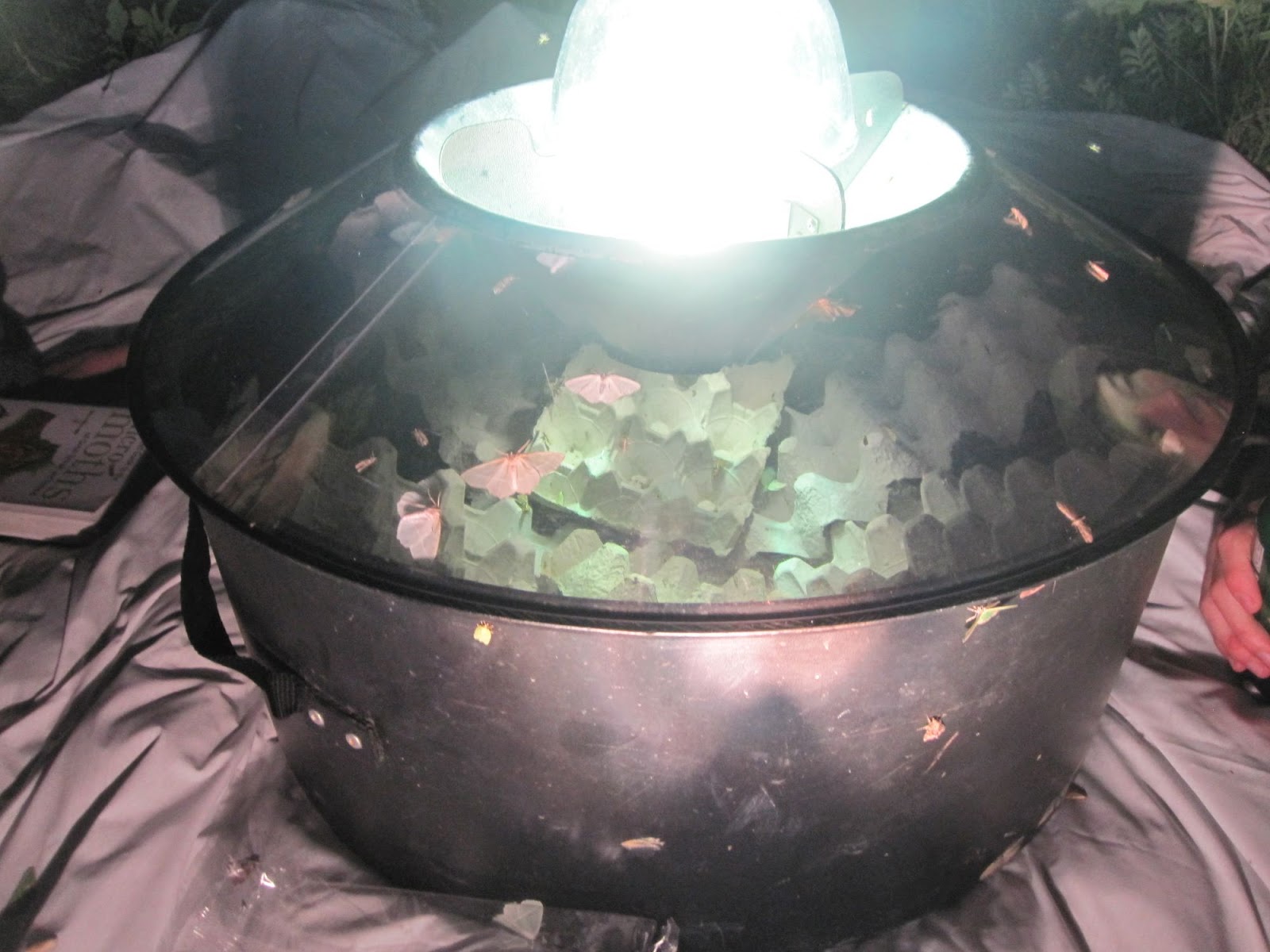
Jake's trap: a large actinic light bulb and a plastic bucket filled with egg boxes for the moths to settle on

The great thing about moths is not only their incredible diversity, but their aptly descriptive names which make them more memorable. They are well worth surveying for as they can indicate habitat quality; which food-plant species are thriving, whether there is a good woodland/grassland structure, if air pollution is high, or if pesticides are being used. The cool and windy weather can really put them off, but luckily tonight was mild and the moths began arriving at the trap before it was even fully dark...

Light Emerald (Campaea margaritata)

Blotched Emerald (Comibaena bajularia), but renamed 'Carlsberg Moth' by us

Coxcomb Prominent (Ptilodon capucina), side view

Coxcomb Prominent (Ptilodon capucina). It's like a tiny, fluffy Lion! 

We left the trap to carry on its work and went searching for flowering shrubs in the torch light, checking for nectar-loving species. We hadn't gone far before we stumbled across something else pretty awesome!

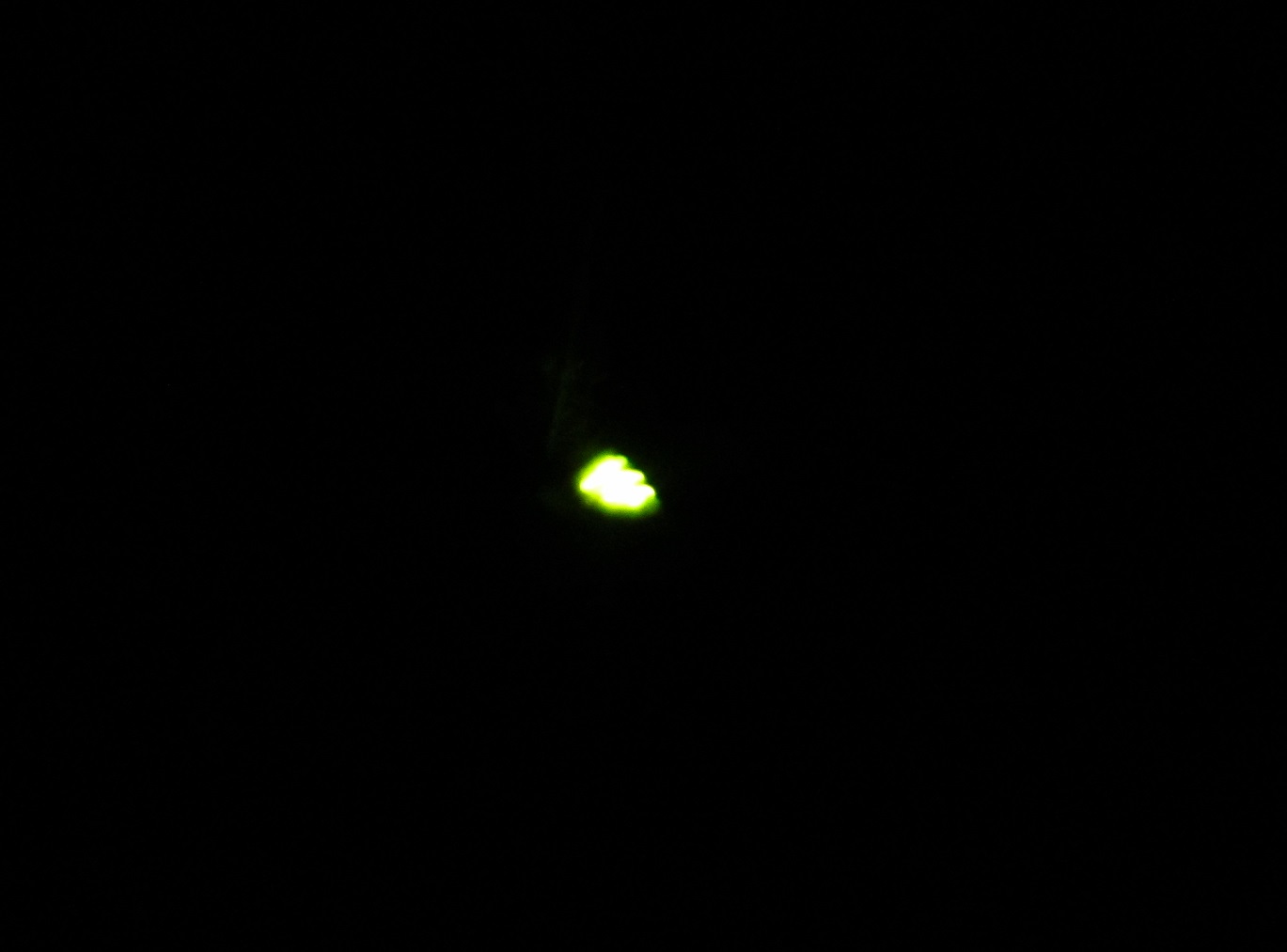
A funky green LED, out in the middle of the grassland

Photo taken with the camera flash on... 

This is a female Glow Worm (Lampyris noctiluca). It is not a worm at all but actually a type beetle, belonging to the Firefly class of insects (which incidently is my favourite class of spaceship). The end of her abdomen glows through bioluminescence, which is basically the light produced through an internal chemical reaction. I've regularly been finding Glow Worm larvae under the reptile refugia, even males in a moth trap, but this was my first glowing adult female!

Scorched Wing (Plagodis dolabraria), genuinely looks like a scorched piece of papery bark... 
I guess it has its reasons 

Back to the moth trap and soon it's time to start collating all the species. A comprehensive species tick-list makes things a bit easier with one person calling out the names and another recording.

Peach Blossom (Thyatira batis)

Peppered Moth (Biston betularia)

Moth accessories must be worn at all times

Jake says we got around 67 species from just one trap, which is not a bad haul. In fact, it was enough that some of them even decided to hitch a ride home in my rucksack; a Large Yellow Underwing flapping about your face while you're driving isn't ideal.
   Moths are blooming fantastic things when looked at more closely, so here are the profile pics of all 67 species I have diligently photographed...

Clouded Silver (Lomographa temerata)

Beautiful Golden Y (Autographa pulchrina)

Common Swift (Hepialus lupulinus)

Large Fruit-tree Tortrix (Archips podana) 

Just kidding, I do have some kind of social life at the weekend.
Even more moths and invertebrates to come this month!