Showing posts with label Horleyland Wood. Show all posts

Tuesday, 20 May 2014

Roving Records - Land East of the Railway Line (14/05/2014)

Powerline Ride in Horleyland Wood

This is probably my favourite spot in the whole of Gatwick (perhaps with the exception of a departure lounge)...

Footpaths in the LERL and woodland rides

Who needs a holiday when you can escape to a spot like this! 

This set of powerlines, running north to south along one edge of Horleyland Wood, is honestly more exciting than it first sounds. A couple of years ago, the path was opened up after some major clearance works in order to keep the overhead cables free from vegetation. Now it has a shrubby edge of coppiced Hazel, graduating down into patches of Bramble and woodpiles, blending further into a fragrant border of Bluebell and Red Campion.

Large White Butterfly (Pieris brassicae)

This is an insect-haven, catching the sun for much of the day and is largely sheltered from the wind. The mixture of open grassland flora and woodland edge flora provides food resources for a greater suite of species. I could literally spend hours on this path, trying to record the awesome variety of inverts or just watching them bumbling about on their personal business. If only I had the hours to spend in spring!

 
Red-headed Cardinal Beetle (Pyrochroa serraticornis) is a distinctive red beetle 
common at this time of the year 

Less common is the Black-headed Cardinal Beetle (Pyrochroa coccinea)

A species of Crab Spider (Misumena vatia), with the distinctive markings of a male

You might think that your common old Bramble looks unimpressive and not worth the effort, but when the sun hits it, the flowers come alive with excitable aculeates...

Early Bumblebee (Bombus pratorum) male

Honey Bee (Apis melifera). This female worker might be one of Tom's tribe

Cuckoo Bee (Nomada spp.)

Plenty of other lovely stuff could be seen in the woods and grasslands on this day, including Azure Blue and Large Red Damselflies, Small and Green Veined White Butterflies, Garden Warblers singing in the woodland edge and Carrion Crows fighting in the open skies with a Common Buzzard.    

Wild Garlic, or Ramsons (Allium ursinum) carpeting the woodland floor in a tasty, pungent layer

Right now the woodland groundflora is at its peak: Bluebells, Red Campion, Cuckoo Flower and Greater Stitchwort all to be found in one spot

Dingy Skipper Butterfly (Erynnis tages) in Goat Meadow

Another one of my excellent birding pics - Common Buzzard (speck in the clouds)

This ride is also where we found that fantastic specimen of Araneus angulatus, which I'm afraid I am still banging on about a year later...

Friday, 31 January 2014

January Summary

JS Agriculture carrying out birch thinning in Horleyland Wood, Land East of the Railway Line

Things have been relentlessly damp here as that niggling hole in my hiking boots can attest to. The mud and standing water makes accessing sites with heavy duty equipment much harder work.

Coppicing on the south bank at Pond 3, Land East of the Railway Line 

Somewhere here, the pond stops and the path begins

JSA with Gatwick Greenspace, coppicing and habitat piling on the grassy slope, North West Zone

Creating bare earth patches on the grassy slope, North West Zone. Areas like this can be beneficial to certain invertebrate groups such as burrowing bees and carabid beetles

I quite like writing these summaries - searching through my photos from the the past month causes an 'oooh yeah, I forgot about that' moment.

A rare frosty day in January 2014. Wet scrubland west of Brockley Wood

I have continued with the odd wildlife survey and as the season progresses, our visiting thrushes seem to have changed their activity. They have been spending more time foraging at ground level while they search in the leaf litter. I am still seeing high numbers of Redwing, but much fewer Fieldfare then last month. The winter RiverSearch surveys have have been challenging, as the river features I am supposed to be mapping are mostly under the muddy water.

River Mole at Povey Cross. Today it was in-channel and mostly behaving

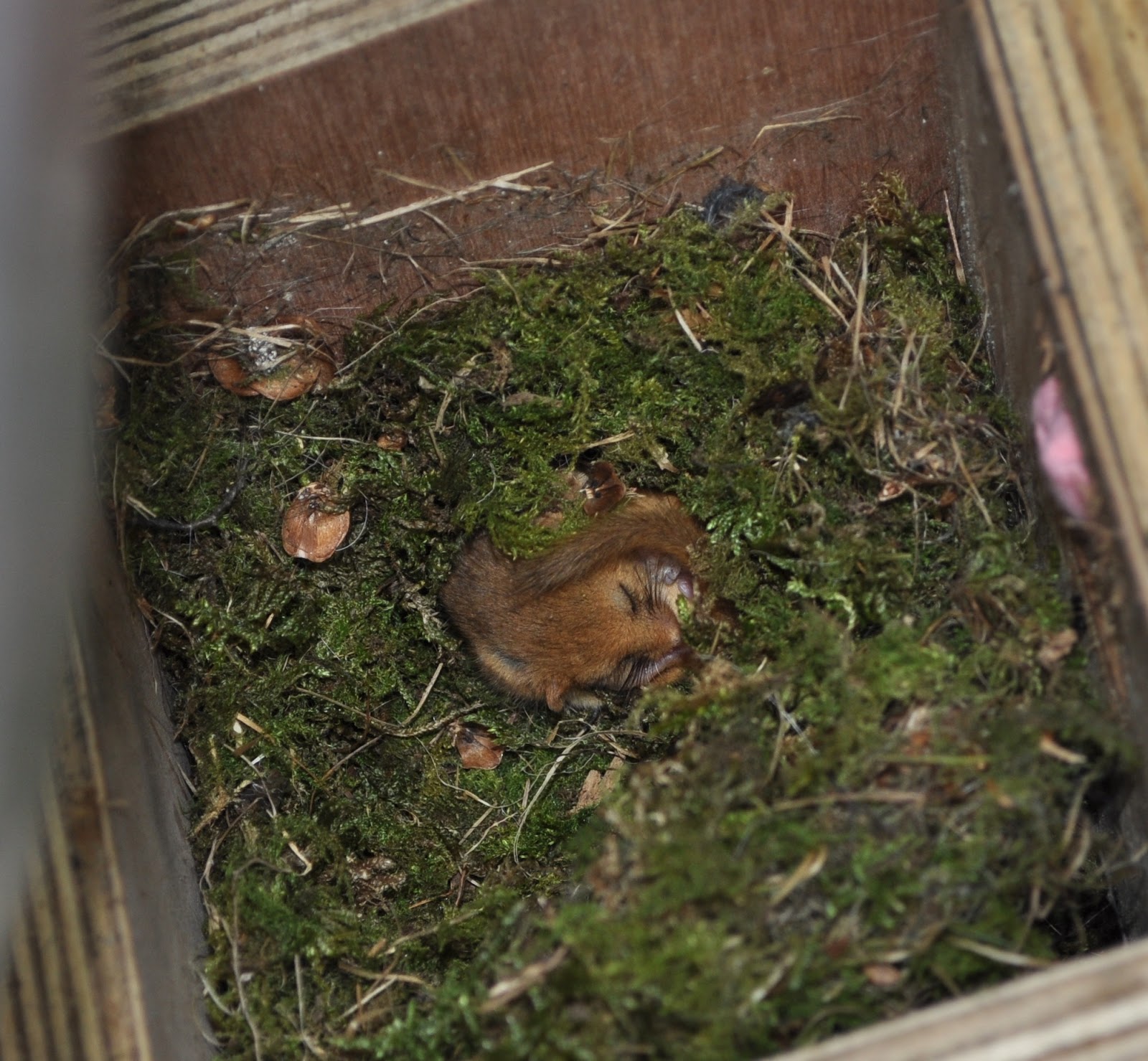
Also, we have carried out a dormouse box maintenance and winter clean-out job in Horleyland Wood. There has finally been some definite mammal activity in them, with plenty of Yellow-necked mice moving in. It is a similar story at the woodlands in nearby Crawley, where we even found a new nest of Yellow-necked mouse pinkies (babies). Despite the strange season, they will probably be doing quite well in this mild weather.

George turfing the old nesting material out of the dormouse boxes

Yellow-necked Mouse (Apodemus flavicollis), 
reluctantly waiting for us to finish the cleaning so she can move back in.

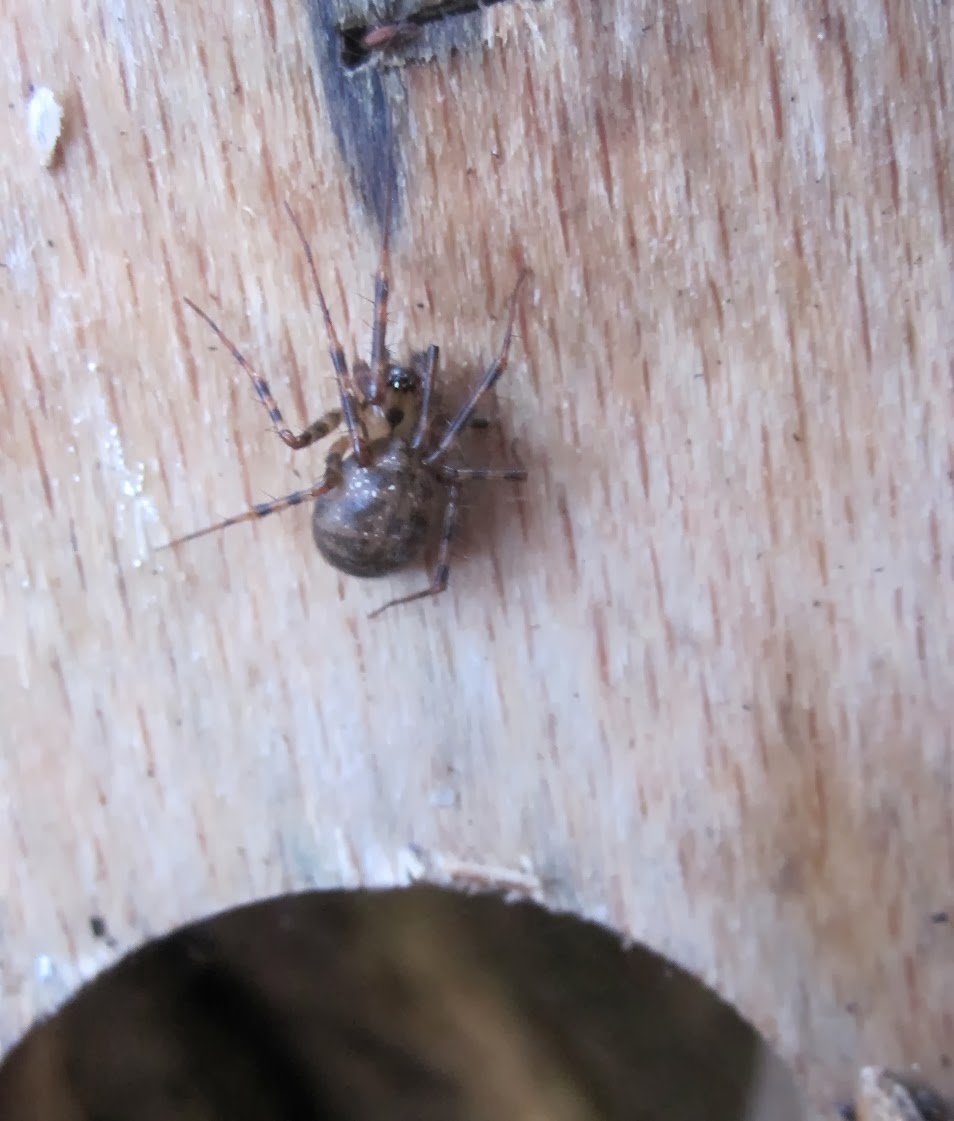
Making good use of our nesting boxes over winter, is the local spider community. I found around 6 different species on this day...

Your friendly neighbourhood Walnut Orb-weaver (Nuctenea umbratica),
 trying its best to look inconspicuous

Labulla thoracica, which belongs to the same family as the Money Spiders (Linyphiidae)

A small False Widow (Steatoda nobilis). And no, it did not go straight for my jugular

Thanks a bunch to Katie, George and my mum Sue for helping me out on these most recent surveys.
   I am amassing a collection of invertebrate pictures as I sort through the malaise trap invertebrate samples. One of the coolest things I've found so far is this awesome Sawfly: I think the genus is Cladius. It's feathered antennae look like massive antlers... I'll have to dedicate a separate post at some point to my desktop invertebrate finds.

Underside of a Sawfly (x10 magnification)

   I am still catching up on my species data entry for the past year. The final American Signal Crayfish count was 482, fished out of a 200m stretch of the River Mole. It will be interesting to see how many I get out of the same stretch next summer.

This was a single haul of the invasive crayfish species Pacifastacus leniusculus,
at the peak of summer 2013

Wednesday, 6 March 2013

Dormouse developments

On Friday of last week a new housing development was completed by the British Airways Engineering Volunteers in Gatwick's ancient woodland Horleyland Wood...

Dormouse box mounted in mature hawthorn with honeysuckle, Horleyland Wood

Torpid dormouse in a box, photo taken on a survey in nearby Crawley, 2012

As well as achieving pretty incomprehensible levels of cuteness, the hazel dormouse is an elusive wee beastie and the best way to survey for them is to tempt them in with luxury accommodation. Although I hesitate to use the word ‘fussy’ they sort of are... however by the same token they could be deemed good indicators of high quality woodland and levels of biodiversity.

A typical dormouse nest, photo taken at some nearby woodlands in Worth, 2012 

They tend to come out of hibernation around April and then start scoping out new accommodation for the breeding season. If their presence is confirmed then a licensed handler will be brought in to assist with weighing and sexing individuals, determining the health of the population. 

Dormouse bagged to be weighed and checked over, Crawley 2012

Due to their rapid decline in the past 100 years or so, the hazel dormouse is protected by law. Causes for the population crash are believed to be the loss of ancient woodland, fragmentation of woodlands, loss of hedgerows and unsympathetic woodland management; these issues we are confronting in our Gatwick Biodiveristy Action Plan.

The British Airways Engineering volunteers are a keen bunch with a zeal for helping improve the environment of Gatwick. They are very handy to have around with their technical skills and I will blogging all about their good work in the future.


Many thanks to Adrian Haines, Carl Treynor, Colin Sexton, Glyn Finch and Terry Sparrow of British Airways Engineering