Showing posts with label surrey mammal group. Show all posts

Sunday, 30 October 2016

Still searching for Micromouse

We have conducted 3 consecutive seasons of mammal surveying now, targeting Harvest Mice for the Surrey Mammal Group genetics study. I can only describe the feeling as 'incredibly disappointed' when you do finally capture one of your target species, then it perishes on the survey.

Eurasian Harvest Mouse (Micromys minutus), deceased adult male

Ecological surveys help us to target our conservation efforts, providing important data for reports such as the State of Nature. We do not wish to put animals through undue stress, and it was unclear why this individual died in the Longworth trap. As per the best practice protocols, traps were generously stocked with bedding, food, sources of moisture and checked within the regulated times. Harvest Mice do however have very short life spans, so it could be this individual was just reaching the end of his natural life. 

And so, after this one and only capture of a micro-mouse plus several discussions with other Harvest Mouse surveyors, these are the things I have learned:

1. Harvest Mice are difficult to survey, despite finding plenty of nests on our site. The fluctuating weather, changing habitat use and population crashes could all be impacting on our struggle to catch these little critters.


2. Despite this unfortunate mortality, Harvest Mice are fairly resilient; after speaking with other surveyors it seems very few casualties occur with Longworth traps. The overnight temperatures were above the minimum recommended for surveys, so cold was unlikely to be a factor, but we still took the precaution of providing extra insulation for the traps.

Longworth trap on stand with bubble wrap plus layers of grass

3. Wood Mice are relentless. I've seen more Wood Mice this year than craneflies. Their adaptability and climbing skills are to be commended, and they are certainly not deterred by the experience of temporary captivity! In fact, they mostly seem to find the traps before the other mammals can get a look in...


4. Shrews are awesome and sometimes I wish we were studying Shrews instead.

Lucy Groves, keeper at British Wildlife Centre with a Pygmy Shrew


Shrews love these castors (fly pupae)

5. Tube traps are a faff and take about 3 times longer to clean than Longworth traps.


6. On this survey, the average occupancy of Longworth traps was 49.71% whereas tube traps were 42.33% 

Collating trap data


Adrian Ashley is a handy chap to know - he's both an ecologist and a bespoke jeweller! He has kindly serviced the Longworth trap mechanisms which were not working so well.

7. Traps stands can definitely help to reduce the number of Common Shrew captures, but do not deter Wood Mice one little bit!

Tom Simpson often raids the set of vampire films for us 

Traps off the ground are more likely to tempt in Harvest Mice and appeal less to Common Shrews


8. Let the record stand that Martyn Cooke has still never seen a live Harvest Mouse in the wild.

Our survey data ends up in 3 places; on the internal Gatwick database, online on iRecord (which feeds into the National Biodiversity Network Gateway), and with the Surrey and Sussex Mammal Groups. We will be discussing the merits of continuing these surveys and any new approaches we might take next year.

Below are a few of our mammal records from the past 2 weeks (photos by Martyn Cooke):

Pygmy Shrew (Sorex minutus)

Bank Vole (Myodes glareolus)

Wood Mouse (Apodemus sylvaticus)

Surprise! Not a mammal: Wren (Troglodytes troglodytes)

A huge thanks to all who have helped out these past two weeks of surveys, and to Jim, Lucy and Laurie for all your advice.

Thursday, 15 October 2015

Micro-mouse micro-management

Volunteers Peter and Mark setting up humane Longworth traps

Because we are gluttons for punishment, we decided to have another crack at monitoring Gatwick's resident Harvest Mice (Micromys minutus) in the North West Zone. Again, after a week of full-on surveying, with the finest smorgasbord ever presented (Braeburn apples, Scottish porridge oats, mealworms, casters, capped off with crunchy peanut butter) catering for even the fussiest of Harvest Mouse guests... we glimpsed not even a whisker!

River Mole floodplain grasslands, North West Zone

However, it is still a great excuse to delve into the world of Gatwick's other small mammals species. Here are a few snaps depicting our finds:

Bagging and weighing occupants

Common Shrew (Sorex araneus)

Common Shrew (Sorex araneus)

Pygmy Shrew (Sorex minutus)

Re-baiting the traps after the evening check

Wood Mouse (Apodemus sylvaticus)

Wood Mouse (Apodemus sylvaticus)

To big to fit in our Longworths: Roe Deer (Capreolus capreolus)

Field Vole (Microtus agrestis)

Field Vole (Microtus agrestis)

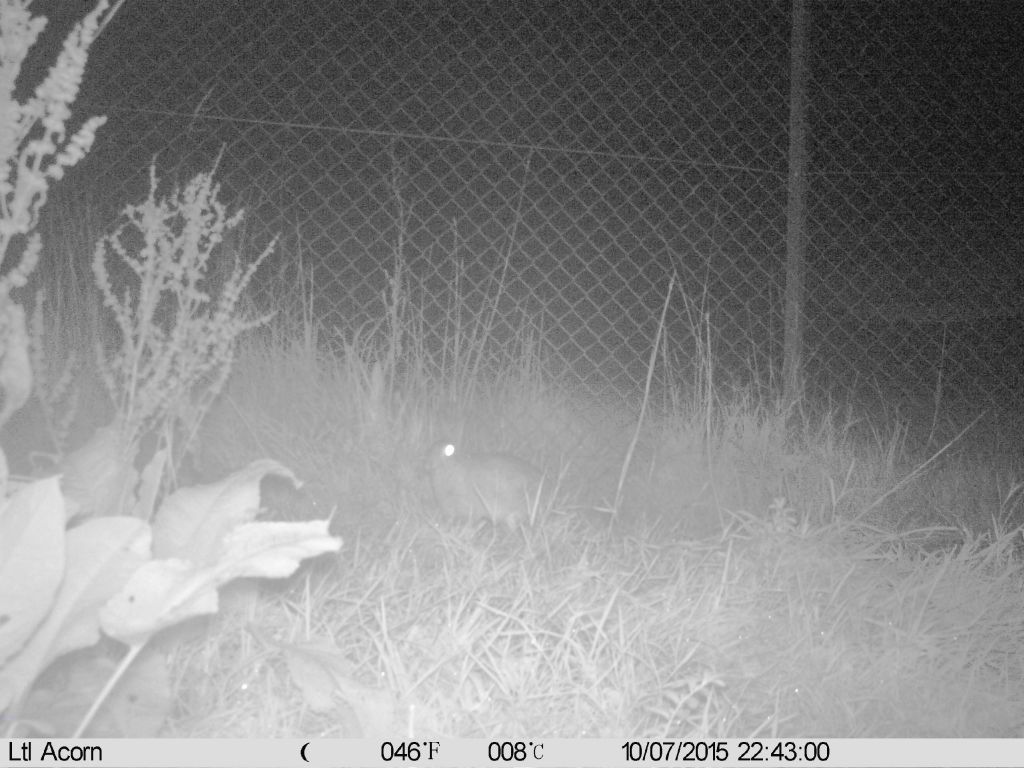
The results of our camera trap efforts:


 Border Force Patrol Dog (Canis lupus familiaris)

Back-end of a Badger (Meles meles)

Eye-shine of a Rabbit (Oryctolagus cuniculus)

Ecologist (Homo sapiens sapiens)

NWZ Mammal survey species list 2015 (in rough size order):
  • Human
  • Roe Deer
  • Domestic dog
  • Badger
  • Red Fox
  • Rabbit
  • Field Vole
  • Wood Mouse
  • Common Shrew
  • Pygmy Shrew


Missing from this year's survey but recorded here previously:
  • Bank Vole
  • Yellow-necked Mouse
  • Harvest Mouse

Harvest Mouse (Micromys minutus), North West Zone in 2013

Many thanks to all of those who helped out on this year's survey: Brad, Martyn, Anna, Adrian, Peter, Sue, Mark, Jim, Annabelle, Kathryn, Emily and both the Surrey and Sussex Mammal Groups.

Monday, 17 November 2014

Micro-mouse mysteries

I have been fortunate enough to meet some really passionate conservationists through the Wildlife Trusts, who remind me the most essential part of any scientific study is to define the question which needs answering. 

North West Zone at Gatwick, adjacent to the River Mole grasslands

Subject mammal: orangey fur, big ol' eyes, small ears and a prehensile tail

The Harvest Mouse (Micromys minutus) is a rather iconic, yet understudied mammal in our fair isles, so folk like Jim Jones and Laurie Jackson are working to fill the gaps in our knowledge. We know that Harvest Mice are present at the airport, but how well are they doing and what are their habits once autumn rolls in and the wetland water levels rise? Earlier this month, Jim and myself oversaw a survey in the North West Zone, tying into a larger population study by the Surrey Mammal Group.

Monday Evening: Setting up on site


Jim mixes up a tasty snack for our small mammal traps
(peanut butter, apple, oats and mealworms)

The aim is to compare the effectiveness of 3 types of humane mammal traps at different heights in the vegetation. This could help inform conservationists of the best way to target sample Harvest Mouse populations.

Longworth Trap on a stand

Sherman Trap on a stand
  
Trip Trap (which doesn't always trigger, meaning free food and accommodation for luckier beasties)

And did we find what we were looking for? Here is a photo diary of our results...

Day 1:

6.30am. Cool and misty morning along the River Mole, north-west of the airfield

Trainees arrive on site and Jim gives us a brief on the methodology

Our first capture is a young Field Vole (Microtus agrestis), gently scruffed to determine the gender

Noon session: a less-than-amused Wren (Troglodytes troglodytes) popped out of a longworth trap, none the worse for wear!

Evening session: 6.30pm

Persistently cute; same Field Vole (Microtus agrestis) gets emptied out for the 3rd time today


Peak Counts:
Field Vole (Microtus agrestis) x 2
Wood Mouse (Apodemus sylvaticus) x 3
Wren (Troglodytes troglodytes) x 1

Day 2:


Wood Mouse (Apodemus sylvaticus)

Yellow-necked Mouse (Apodemus falvicollis), a larger, longer-toothed cousin of the Wood Mouse

Peter bravely demonstrates how to scruff a Yellow-necked Mouse


Peak counts:
Bank Vole (Myodes glareolus) x 2
Wood Mouse (Apodemus sylvaticus) x 8
Yellow-necked Mouse (Apodemus flavicollis) x 1

Day 3:


We don't normally trap in persistently cold conditions due to welfare issues, but last night's temperature dropped to a frostier level than expected. Luckily no casualties, plus many of the traps were frozen open with all the bait snaffled (but plenty of rodent poop left in return).

Survey form

Noon session: Joe and Megan photograph the contents of a trap...

Which turns out to be our first Common Shrew (Sorex araneus)


...Still no sign of that evasive Micro-mouse!

Peak Counts:
Bank Vole (Myodes glareolus) x 2
Field Vole (Microtus agrestis) x 1
Wood Mouse (Apodemus sylvaticus) x 3
Yellow-necked Mouse (Apodemus flavicollis) x 1
Common Shrew (Sorex araneus) x 1

Day 4:


Kathryn and Sue helping to replenish bait in the traps

Evening session: Trip-trap; resolutely empty

Bank Vole (Myodes glareolus)


Peak Counts:
Bank Vole (Myodes glareolus) x 2
Field Vole (Microtus agrestis) x 2
Wood Mouse (Apodemus sylvaticus) x 6
Yellow-necked Mouse (Apodemus flavicollis) x 2

Day 5: Final morning


A relatively peaceful moment at the airport, reminds me of the film 'Warm Bodies'!

Jim holds the final Field Vole

Final Field Vole is having trouble letting go... 
(perhaps after being spoiled by days of free full-board accommodation)


Peak Counts:
Bank Vole (Myodes glareolus) x 1
Field Vole (Microtus agrestis) x 2
Wood Mouse (Apodemus sylvaticus) x 1
Yellow-necked Mouse (Apodemus flavicollis) x 3

Apparently, Harvest Mice will take their holidays around this time of year while the rest of us are still working hard. Who knows why we didn't find any, but judging from the number of nests we have seen on this site, 2015 will be be the year!