Showing posts with label trophallaxis. Show all posts

Thursday, 29 October 2015

Gatsbees B-Log: September 2015

Money Spider (Linyphiidae)

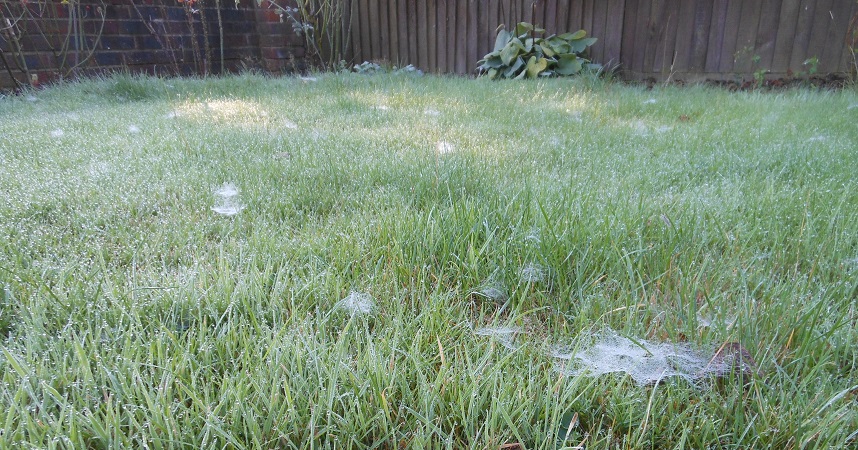
September brought cold nights and tiny, immaculate spider’s webs in the grass


and warm sunshine in the day to release nectar from the Sedum, much to the delight of the bees.


They are still throwing out unwelcome visiting wasps...


and are bringing in nectar and pollen from Himalyan balsam, Impatiens glandulifera. It begins to flower in July, is highly invasive, and is the tallest annual plant


with seed pods which burst, spreading them far and wide.


The bees carry a distinctive white patch of pollen on their thorax from the balsam and bring back loaded pollen baskets and nectar for weeks. Both bees are also collecting water; the bee’s tongue in the centre is just visible sucking up the dew on the leaf. Honest guv’na!


Beekeepers have a system for marking queens on their thorax with a coloured pen to denote which year they were born,

A small pink dot remain's from last year's marking

but generally I prefer to leave them unmarked so that I look for more than just a queen with a dot on her head. How influential are those that impress us first with their teaching!

Contain her, don't squash her!

The queen cage is pushed gently onto the queen to keep her still and she is marked on her thorax through the wire with one of the coloured pens.


It’s been good practice too for Tom and Rachel to find unmarked queens and now they are good queen spotters, it’s useful to mark one or two in the larger colonies. Job done!

Can you spot the queen? Answer next month...

It’s not easy to see queens amongst the 50,000 workers in summer...


unless she’s a big 1st or 2nd generation of commercially produced stock. As they interbreed with local drones, the queens get smaller. I look for a bee with long legs and a spidery walk, especially in the brood area where I’d expect to find her. Hope, not expect.


You may see her long abdomen, even though her head is in a cell checking it out for laying an egg and


a retinue of worker bees surrounding her, exchanging food and pheromones with the queen, which over 24 hours, informs all the workers that the queen is still there.

Trophallaxis

They in turn pass on the pheromones to each other, called trophallaxis.

Hawthorn (Crataegus monogyna)

Blackening Waxcap (Hygrocybe conica)

There are fairies at the bottom of the garden.


Fuchsia


They fill every nook and cranny with comb in a nectar flow in the summer


so there was a bit of housekeeping to do where the girls had built comb in an area of the hive without a frame.


They were quite calm while we cut it out


but there was surprisingly little food in it due to the wet and cold August, so we’ll have to make sure they have enough stores for the winter.


Forest Bug (Pentatoma rufipes) on hive lid


Hey wasp! Buzz off………………

Gillybee x

Wednesday, 8 October 2014

A Game of Drones

Its been a very steep learning curve since the Gatsbees arrived back in March, but their first summer has seen Gatwick's honey bees thriving! With the colonies rapidly expanding and swarming through the season it's not always easy for us novice beekeepers to stay on top of things. Luckily our mentor Gillian is keeping a close eye on everything and knows how to cope...  

Gillian and myself, adding frames to a hive

A frame of bees

Just as we thought everything was calming down, a late summer check of one of the hives revealed patches of large domed capping on several frames of worker brood cells.... Hmmm.
These larger cells containing drone (male) brood are expected earlier in the summer, when the colony is beginning its reproductive cycle. A drone's main task is to mate with virgin queens, after which they die. Those who have not fulfilled their duty are kicked out, usually in late August and then also die (tough gig). We should definitely not be finding drone-comb at the end of summer when the colony should be storing food for the winter!

The domed capping of drone brood can be clearly seen on these cells

A drone-laying queen might be an old queen, running out of her stores of sperm and only laying unfertilised eggs. However, after a bit of careful investigating, we discovered that this colony had beat us to it and replaced their old queen without swarming; a process known as supersedure. The only problem was she had been superseded by a tiny new queen which was obviously struggling to keep the colony going, only producing males and not enough workers for the colony to survive the winter.

This sub-standard queen was only recognisable by her orange legs

The solution is to remove the drone-laying queen and unite the bees with one of our other 'queenright' colonies. The hive next door, containing a strong colony with plenty of young bees and food stores, all in close proximity, made it the perfect choice for a merger.


The queenright colony is prepared by placing a sheet of newspaper and a queen-excluder on top of the frames of the brood chamber. The (now queen-less), drone-heavy colony is placed on top and as both colonies slowly chew their way through the newspaper, their pheromones gradually mix and the bees are smoothly integrated but none the wiser.

  After a week, the bees have chewed their way through to unity 

This 'supercolony' with its shared resources should now have a much better chance of surviving through the winter... "When you do things right, they won't be sure you've done anything at all." (Futurama).

Abdomens pointed in the air, they fan their wings while releasing a pheromone, alerting the colony to the new entrance

Gill keeps diligent reference notes of dates and individual hives


Trophallaxis - where food and chemical secretions are transferred by mouth between individuals.
This occurs with many of the social insects such as ants, bees and wasps

Our beehives are now being left to their own devices as the colonies make good their stores for winter. We will check on the hives periodically and look out for any winter activity.