Showing posts with label badger. Show all posts

Monday, 9 January 2023

Thursday, 19 December 2019

Early winter bird survey - North West Zone December 2019

Just as we pull up in the car to the start of the transect, Tom Forward laments his wish to see a Black Redstart in the UK, after not having seen one for so many years.


Before I even switch off the engine, we spot a small bird bobbing up and down on a concrete wall.
Can I get a whoop whoop Tom...

Juvenile male Black Redstart

A blooming Black Redstart (Phoenicurus ochruros) is our first species of the day!! This really is an exciting find; a red-listed species which was previously recorded as breeding at Gatwick (during my first year here in 2012), however we've had no reports of them for a number of years now.  They are a very scarce bird in the UK, with only around 40 breeding pairs and 400 birds overwintering. 

Tom F. must have been thinking the habitat looked just right for this species, on the urban edge of the airfield. This one seems to be a juvenile male in its first winter plumage; it flies up to perch at the top of the new Boeing hangar. At the end of the survey when we returned to the car, we were even treated to its bizarre scratchy song...


Got to love a good record shot


Our transect begins at the new Boeing Hangar, following the length of the River Mole through the North West Zone. At the old concrete batching works, as well as Black Redstart we pick up another red-listed species; Grey Wagtail (Motacilla cinerea) along with Dunnock (Prunella modularis), which is amber-listed. Like Robins at this time of year and our Black Redstart, the Dunnocks are busily singing away.


It turns out to be a hectic start to the transect, with a Kestrel (Falco tinnunculus), amber-listed, hovering over the scrub and a pair of Stonechat Saxicola rubicola perched up on Teasel seed heads.


Stonechat Saxicola rubicola RSPB

A lone Robin ticks away, but the Wrens Troglodytes troglodytes are sounding off literally everywhere today. 

Wren Troglodytes troglodytes RSPB


The grasslands are good and frosty this morning, with plenty of standing water, so fingers crossed that our wellies are up to the task (normally one or both of us are a bit leaky). A pair of Reed Buntings (Emberiza schoeniclus), amber-listed, can be heard calling from down at the river side.


After picking up a few species along the southern edge of Brockley Wood, we push through the scrub and move down toward the river reed beds. Pausing here just for a moment produces the faithful sound of Water Rail Rallus aquaticus squealing deep within the reeds.


The habitat mosaics here are pretty special. The area has been undergoing natural processes since this section of the River Mole was realigned and designed as a floodplain meadow in 1999. The western edge of Brockley Wood now graduates into mixed scrub habitat and long grass, which in turn blends into shorter grass and the floodplain meadow.


Intersecting habitats result in a high availability of ecological niches, which in turn results in a lot of different species. The only thing missing from these ecosystems are the larger herbivores and other animals which would have managed them, which means that we have to do a degree of the grass and scrub management ourselves.


However, some of the local mammals still leave their mark...


On a small scale, Badgers (Meles meles) can behave rather like Wild Boar. In the picture above, they have been rootling through the turf and soil searching for hidden food (bulbs, invertebrates, mammals nests etc), resulting in local patchy disturbance. This process mixes up the seed bank, allowing for more wildflower diversity and creating important bare ground habitat.


Over to the north of Brockley Wood (likely named for the Badgers), as we poke our heads in a few Wood Pigeon (Columba palumbus) clatter off through the canopy, but otherwise all seems quiet. A lone Nuthatch (Sitta europaea) calls in the distance.


Back down to the floodplain and the mist is still clinging to the banks and reed beds.


Rounding the corner of a reed bed, we are greeted by a flurry of beige-coloured feathers and a pinging sound....

NO WAY. IS that a Bearded Tit?!!!

No record shots today...

I grab hold of Tom F's arm and I'm making tiny Water Rail noises myself... we can't actually believe it, this is such an unexpected find. This is certainly a first for our sites, and after consulting Twitter hive-mind, it might be a first ever record for the Mole Valley district!

Bearded Tit, aka Bearded Reedling Panurus biarmicus RSPB

This is my first ever clear sighting of this species, and even Tom F. hasn't seen one in years. It seems to be a lone male which is likely just stopping off for winter, or may have been pushed out of another more suitable habitat, but what an incredible record and such an affirming tick for the River Mole reed beds. I actually got a bit choked up!


This section of the river is maturing nicely since its realignment, so perhaps we are now starting to see just the right ratios of scrub and reed habitat intermixed with floodplain grassland. It will be exciting to see what else turns up in the next few years.


Pressing on along the floodplain, we are treated to another rare sight; a Water Rail! This is unusual for us as we normally only ever hear them. It flutters across our path, its long legs tucked in but feet protruding out in front as it disappears into the reeds.

Water Rail (Rallus aquaticusRSPB


As we reach the end of the transect, we are treated to close up views of a Buzzard (Buteo buteo) carrying food in its talons, with two Jackdaws (Corvus monedula) winging their way in lazy pursuit.


39 species is a blooming good number for our winter bird survey sessions. 
This was certainly a memorable one for both myself and Tom F!

Species
Scientific name
1
Bearded Tit
Panurus biarmicus
2
Black Redstart
Phoenicurus ochruros
3
Blackbird
Turdus merula
4
Blue Tit
Cyanistes caeruleus
5
Bullfinch
Pyrrhula pyrrhula
6
Buzzard
Buteo buteo
7
Carrion Crow
Corvus corone
8
Coot
Fulica atra
9
Dunnock
Prunella modularis
10
Fieldfare
Turdus pilaris
11
Goldcrest
Regulus regulus
12
Goldfinch
Carduelis carduelis
13
Great Spotted Woodpecker
Dendrocopos major
14
Great Tit
Parus major
15
Green Woodpecker
Picus viridis
16
Grey Wagtail
Motacilla cinerea
17
Jackdaw
Coloeus monedula
18
Jay
Garrulus glandarius
19
Kestrel
Falco tinnunculus
20
Long-tailed Tit
Aegithalos caudatus
21
Magpie
Pica pica
22
Mallard
Anas platyrhynchos
23
Meadow Pipit
Anthus pratensis
24
Moorhen
Gallinula chloropus
25
Nuthatch
Sitta europaea
26
Pheasant
Phasianus colchicus
27
Pied Wagtail (yarrellii)
Motacilla alba yarrellii
28
Redwing
Turdus iliacus
29
Reed Bunting
Emberiza schoeniclus
30
Ring-necked Parakeet
Psittacula krameri
31
Robin
Erithacus rubecula
32
Song Thrush
Turdus philomelos
33
Starling
Sturnus vulgaris
34
Stock Dove
Columba oenas
35
Stonechat
Saxicola rubicola
36
Treecreeper
Certhia familiaris
37
Water Rail
Rallus aquaticus
38
Woodpigeon
Columba palumbus
39
Wren
Troglodytes troglodytes

Wednesday, 14 August 2019

Woodland fence trail camera - part 2

(A continuation from a previous blogpost on monitoring of the fenceline apertures and movements of wildlife.)

An old broken fenceline has proved an important passing point for a variety of mammals, including Badger, Fox, Rabbit and Grey Squirrel. We left trail cameras in two locations to see how often the gaps at the bottom of the fence were being used.


Badger (Meles meles)


 Grey Squirrel (Sciurus carolinensis)


Red Fox (Vulpes vulpes) with prey, perhaps a Jackdaw


A fox nibbling a slug. Later on it returned to eat the whole thing!


Pair of Red Fox

Where the new section of fence has been installed, apertures purposely created for wildlife are now being regularly used by Foxes and Badgers. Not all of the footage came out so well, but we did get a few niceties...


Pair of Badgers


A dog Fox shows his approval

Here's a final clip of a young Roe Deer. They grow up so fast!

Roe Deer (Capreolus capreolus) kid and doe

A comparison between the two sites over 7 days of monitoring:

Site 1 (old fence)
Red Fox = 8 passes
Badger = 2 passes

Site 2 (new fence with man-made aperture)
Red Fox = 7 passes
Badger = 5 passes
Grey Squirrel = 2 passes

Many thanks to ecology volunteers Tasmin and Anna, for helping set up the cameras and for sorting through the footage.
Previous blogpost here: https://biodiversitygatwick.blogspot.com/2019/06/woodland-fence-trail-camera.html

Saturday, 30 January 2016

Top 10 Gatwick natural history highlights: 2015

Seeing as I'm desk-bound and continually procuring new strains of rhinopharyngitis previously unknown to medical science, this seemed a good time to round up my Gatwick wildlife highlights....

1. Black is back

One sunny morning early in the year; a stunning, entirely black Grass Snake...

Grass Snake (Natrix natrix)

It turned up on several occasions in the North West Zone, so fingers crossed it will make another appearance this coming spring.


Grass Snake - Natrix natrix subsp. persa?

Also hanging out with blackie was his unusually stripey pal... perhaps related to the European subspecies of Grass Snake, which are also striped. Some DNA swabbing and testing is hopefully in the pipeline....

2. Encounters of the fluffy kind


Hazel Dormouse (Muscardinus avellanarius)


Two of them!!! Found after around 3 years of surveying the ancient woodlands in the Land East of the Railway Line...

TICK.

3. Another Long-horned beastie

Long-horned General (Stratiomys longicornis) female - Photo by Andrew Halstead

On our Wildlife Recording Day back in May, along the River Mole, Andrew Halstead turned up our star find - an impressive soldierfly named the Long-horned General. This very scarce species is normally associated with coastal habitats and salt water, but a few have recently appeared in land-locked areas.


Andrew also swept our first Long-horned Bee (Eucera longicornis) of the year.

4. Tigers on our Jerseys


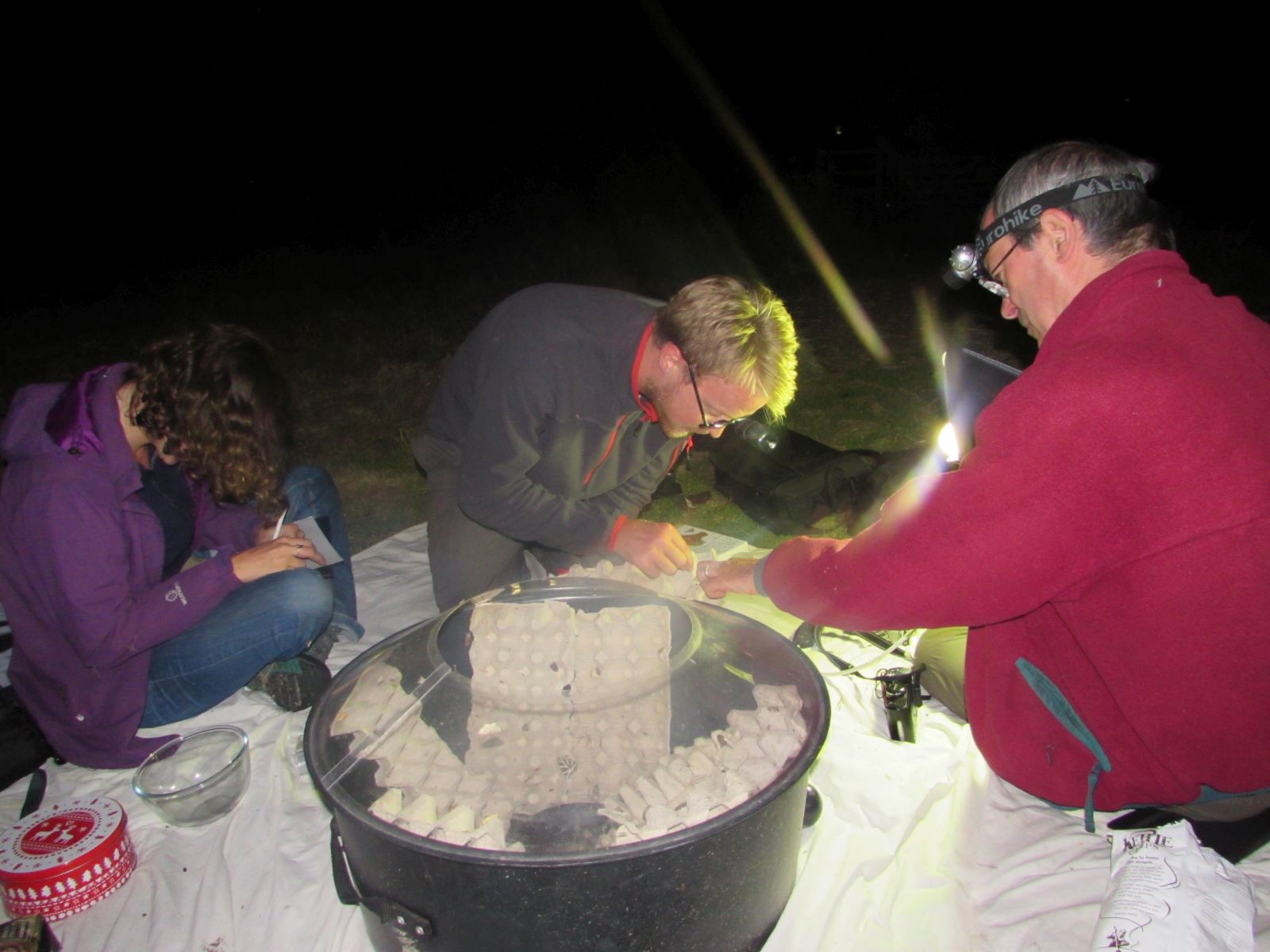
It was just another evening at Gatwick Moth Club with bickering, car-biscuits and male Glow-worms trying to mate with the green generator light. 


A massive Tiger Moth turned up suddenly on Brad's jumper, sparking off another, erm, discussion....

Jersey Tiger Moth (Euplagia quadripunctaria)

In the end we had to believe our eyes; not just one but two Jersey Tiger Moths at Gatwick Airport... A new tick for life-long moth-er Jake Everitt!

5. Ashley's new record

Grass Snake (Natrix natrix) Photo by Julia Gregory

It might just be a plain-ol' Grass Snake, but for us it was a landmark moment as this one had turned up in Ashley's Field... another first in 3 years! This is hopefully an indication that our grassland enhancements are paying off, with amphibians and reptiles benefiting.

6. Ninja bats

I spent a suspenseful dawn with Laurie Jackson, standing in the twilight with detectors on, awaiting bat re-entry into the roost at the old Charlwood Park Farmhouse...

Pipistrelle activity on a bat detector

We picked up plenty of activity and had great views of Long-eared bats landing up on the eastern side of the building, scurrying up and disappearing under the loose tiles. At least three different species of bat are using this building as a roost!

7. The Lost Jewel


Jewel Beetle (Agrilus sp.)

A bitter-sweet highlight (and one Scotty Dodd has not yet forgiven me for) was the time I let go of this stunning Jewel Beetle before he had identified it to species. Not matter that we also procured a carabid beetle called Amarus strenua (Red Data Book 3 species), which was probably even more interesting, so should more than make up for this.

Scotty's tentative i.d: Agrilus sp. indet. cf.bickerisabloodymindedliberator

But I think insult to injury were my rubbish photos.

8. Badger Badger Badger Badger


Just that one step closer to getting some good footage of Badger (Meles meles) at Gatwick.


A Work In Progress (like all of my photography).

9. My kind of human

Meath Green Primary School counting our nest boxes in the Dormouse Challenge

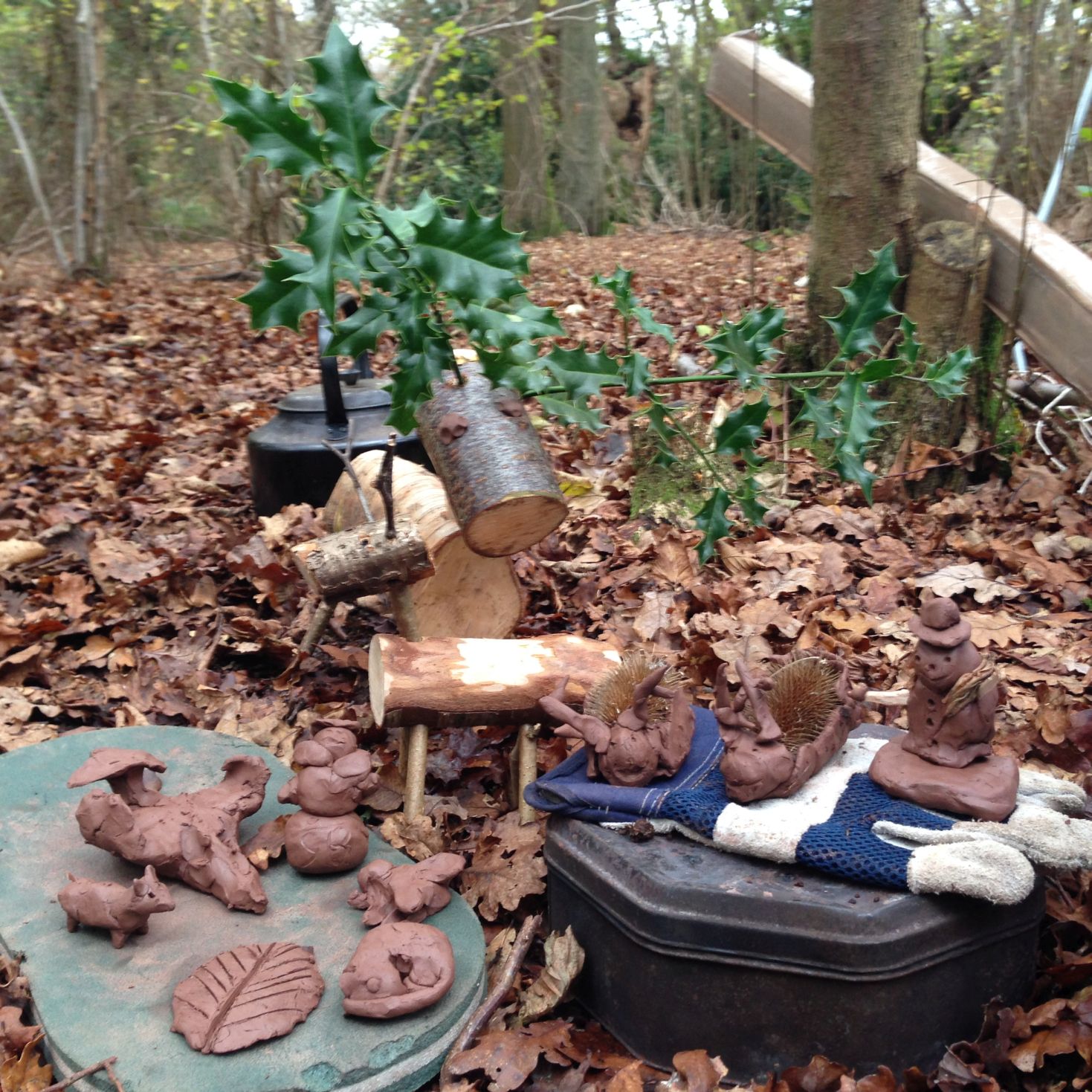
The Forest Schools are Tom Simpson's project, and I've really enjoyed meeting this keen bunch from Meath Green Primary. These tiny humans have been learning all about their surroundings in Gatwick's woodlands, east of the railway line.
   I wish I'd gone to this school!

Woodland festivities

10. The smallest of owls...


Undoubtedly one of my best moments was all the way back in February, while on a bird survey with Tom Forward. This was my first sighting of a Little Owl (Athene noctua) in the wild.
Is it very tiny, or just very far away... or perhaps a blurry picture of a lumpy branch?


Coming up in 2016: even more wildlife photography!