Showing posts with label brown hairstreak butterfly. Show all posts

Thursday, 8 March 2018

An undisclosed amount of coffee

The blog has been quiet of late due to spending most of winter in isolation, constantly (plugging? Chipping? Hacking?) away at Gatwick's Five Year Biodiversity Action Plan Review, which now looks on track for being finished by early April. That means it should be fully done and out of my brain by the time this wee one hatches!

Brown Hairstreak Butterfly (Thecla betulae) egg on Blackthorn. 
Photo taken in the North West Zone, December 2017

Writing about report writing feels a bit meta...but I'll tell you a bit about it anyway. Putting this report together has been at once satisfying and infuriating, riveting and tedious. Reviewing my own work from the very start of my job in early 2012 was a weird, at times heartening and at other times a frankly excruciating experience!


Pulling together the data, compiling the species lists and finding out the totals for the different wildlife groups was the most enjoyable part; immediately it jumps out where we have done great work and covered all bases, and where knowledge gaps are still to be filled.

One of my many desks this winter: the Harris & Hoole cafe at Hookwood Tesco

The things which got me through this winter have included copious cups of coffee, late evenings spent in noisy pubs with my laptop and headphones, and many, many GIF animations of Sean Bean and Arnold Schwarzenegger (special thanks to Tom Simpson for those).

Me in November 2017

Me in December 2017

Me in January 2018

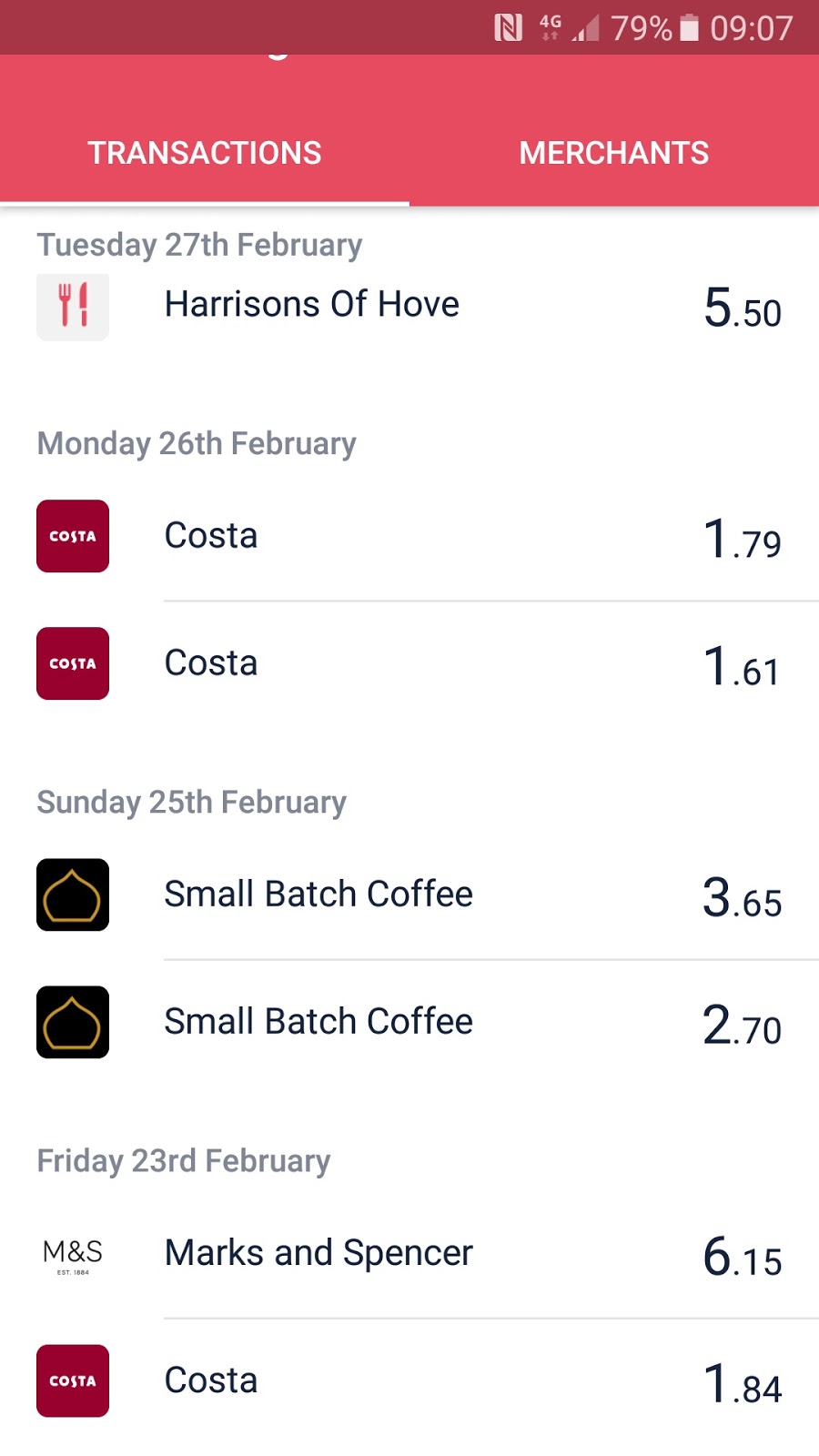
With my handy new Monzo card and the accompanying app, I have even been able to keep track of the obscene amounts I have spent on coffee while writing up this report... My total spend over the past few months (I earned over £20 in loyalty points at Costa!!), is so shameful that I cropped that bit out of the picture.


The incredible amount of help and feedback I have received from the ecologists and conservationists involved in this project has made the process infinitely more manageable, keeping my sanity in a better state than it otherwise would be! This reminds me how lucky I am to work in a sector where so many people have the same passion; no matter what our backgrounds are, or our interests on the side, our end goal to preserve nature is still the same.

I will post another update soon of all the action taking place under Tom S's guidance on the sites!

Tuesday, 31 March 2015

Airport biodiversity conservation in action

Last week we received a visit from around 30 Biological Sciences students studying for their course module 'Conservation in action'. The group was headed by Dave Goulson, Professor of Biology at the University of Sussex.
Clay slope overlooking the airfield and the River Mole; our Long-horned Bee nesting site

Within the broad topics of conservation biology and habitat management, schools of thought change as new science and experience comes to light. Conservationists must be open to feedback, analysing and reviewing their work, questioning the impacts and controversies of what they are trying to achieve. On Gatwick's sites, we have the added challenge of striking a balance between wildlife conservation and aerodrome safety.

Westfield Stream, airside. Areas closest to the airfield are kept as sterile as possible, reducing attractiveness to flocking birds or large mammals which could come in contact with aircraft

Horleyland Wood. Further away our areas are managed to encourage species diversity, perhaps even contributing in small ways to a push-pull dynamic for wildlife

The reality is that we are working with a large-scale operational hub incorporating many buildings, transport infrastructure and the people who operate and pass through it. Since the first bird strikes reported early on in aviation history, research on wildlife hazards at aerodromes has been a broad and contentious topic. It makes fascinating reading because almost every aerodrome has its particular set of circumstances presenting a unique case. Our ultimate priority is minding the safety of both wildlife and people when managing habitats around Gatwick, which means sometimes thinking outside the parameters of an idyllic nature reserve.
Ashley's Field. Showing the students our Grass Snake habitat enhancements and bee areas

The contrast of conservation management techniques was highlighted to the students after visiting the fantastic Knepp Estate Wildland Project near Horsham, West Sussex. This large landscape project (around 1,000ha) uses free-roaming grazing animals and the natural dynamics of succession to revert ex-agricultural land back into something more naturalistic. This practice of 'rewilding' is already producing some pretty exciting results at Knepp. On a much smaller scale at Gatwick, some of our areas have also been left to 'rewild', as small pockets of grassland which historically were used for pasture or agriculture were long ago abandoned as buffer areas around the airfield. 

Scrub West of Brockley. Searching for rare Brown Hairstreak Butterfly eggs on Blackthorn - it took the students only a couple of minutes to find one of these tiny eggs

No easy task - these eggs are only around 1mm diameter

However, due to the much smaller sizes of our sites and their overall fragmented nature, we can't expect the same large-scale ecosystem dynamics to come into play. Instead we intervene through techniques such as manual scrub clearance, coppicing and re-planting to maximise the diversity of the land we have left, preventing a few species or habitats from becoming overly dominant. This means that even in a small area, we can maintain a wide variety of good habitats benefiting a wide range of species. 
   Working with a commercial entity has also taught us greatly about mediating between differing agendas; nature wants to perpetuate whereas infrastructure wants growth, and often it would be the latter taking precedence over the former. Communication and information sharing is an incredibly important process in finding sustainable ways going forward and to avoid repeating past mistakes.

North West Zone. Sussex University Biological Science Students and research staff

Tom Simpson and I would like to sincerely thank everyone who came along last Friday for this tour of our sites; it was quite gratifying sharing what we are doing with future ecologists, conservationists and researchers. Hopefully we can continue to establish links with academic and research institutions, providing training, research resources and further developing our airport biodiversity project.

Friday, 28 February 2014

February summary

Going on how busy February has been around this place, my fears about the impending loss of my social life this spring are well founded. Here are a load of photos summing up what we've been up to this past month:

Scrambling to the finish: coppicing and glade clearance with JS Agriculture in 
Lower Picketts Wood

We have opened up our glade close to this beautiful ancient Hornbeam

The spring firsts have already appeared and the online recording is picking up - Red Admiral butterflies and various Bumblebee species have been spotted also many birds have begun nesting. Snow Drops, Wild Daffodil and Dog's Mercury are all well underway in the woodlands, too.

Dog's Mercury - early woodland ground flora

Hazel catkins with their tiny pinkish red flowers

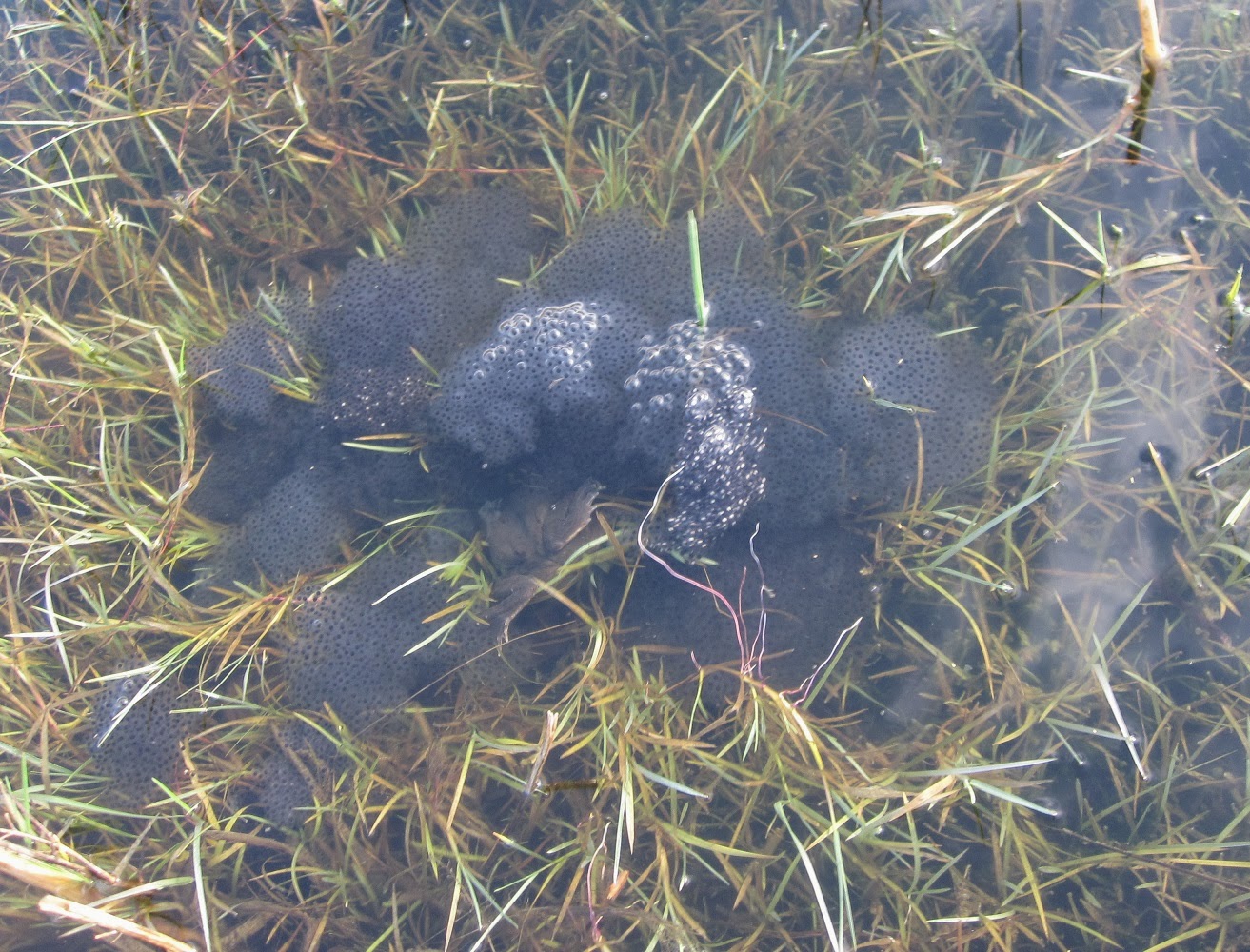
Amphibians have been quick off the mark this year and I saw our first lot of spawn much earlier this month.

Frog spawn in temporary pools in the grasslands; it might mean fewer predators but is still a risky practice

Common Toad hiding out under a reptile refugia

Tackling the scrub in Goat Meadow - West Sussex County Council Rangers and volunteers

We have now removed a significant amount of the encroaching Willow and young Oak trees which have been threatening our lovely wet meadow. Thanks to the WSCC guys Darren, Tom and their volunteers for coming out to do this; I think being whipped by the small Willow saplings and vengeful Hawthorn scrub might appear on future risk assessments!

Grass Snake hangout spot after a re-furb - now a fantastic Grass Snake boulevard strip of 
willow brashpiles and logpiles.

If you ever come out to volunteer with WSCC, you will note their passion for fine filter coffee and biscuits; also how they pack everything away with military precision...

 Quite literally. They are using army surplus ammo boxes!

I recently made up a display board on Gatwick for some biological recorders seminars, where local conservationists and naturalists congregate to rub shoulders, hear about new projects and updated wildlife records. These are some of my best pics of 2013.

Sorting through the malaise trap invertebrate samples is fun but starting to feel endless - some of my nearest and dearest have also been coerced into helping!

Easy to miss (and to get poked in the eye)

During our Winter Thrush surveys, I finally found some direct evidence of the Brown Hairstreak butterfly on site, in the form of these tiny yet distinctive eggs on the Blackthorn scrub.

Perfectly round with coral-like patterning - the caterpillar which hatches out of this will soon be munching on some tasty fresh Blackthorn leaves

Some extra Dormouse boxes were installed by Tom S. of Gatwick Greenspace Partnership and Gatwick's Environment Team. It seems however that they are not protected from random members of public with marker pens... Everyone's a comedian.

We got our first definite record of Badger on site, perhaps a year or so too late! Hopefully it wont be long now 'til we capture a live one on camera.


Tree-climber Allen from JS Agriculture assisted Martyn of Surrey Bat Group with moving old bat boxes from dizzying heights to more suitable locations. Before moving them, Alan opened each of the boxes to check they were empty, and was pleasantly surprised to come across these occupants...


According to Martyn, it is quite unusual to find the Brown Long-eared bats in this type of bat box (a 1FF Schwegler, which to me sounds like some kind of handgun). He had been hoping to get a confirmed sighting of this species onsite here for a while, although we have picked up their calls in previous bat detection surveys with Laurie.

Definitely one of the cuter bat species; this dosey couple were left alone to continue their napping

Alan was careful not to disturb them while taking these photos, but not much chance of that as they were in torpor (a sort of semi-hibernation). Also, in a few of these boxes were strips of honeysuckle bark... Possibly, some sneaky dormice are operating at height!

An old birds nest we fished out of a bat box with a suspicious amount of Honeysuckle 

The most abundant insect of the month award goes to the 7-spot Ladybird, 
lots can be found hidden under bark and leaves

Finally, our late winter bird surveys have pretty much become spring bird surveys with Chaffinch, Skylark, Reed Bunting and many others already in song. The Redwing are very loud at the moment with their pre-migration chatter, which I still think sounds like a flock of Siskin. Small mammals such as Short-tailed Voles and Common Shrews are abundant and active at the moment, as the mild winter has been easy on them. That reminds me of last autumn and how I got on the bandwagon for predicting a very harsh winter - that darn Eddard Stark got it completely wrong.