Showing posts with label royal holloway university. Show all posts

Wednesday, 7 October 2015

My ecology placement at Gatwick

Guest blogger: Elliott Lloyd


My summer has been awesome, mainly due to the part-time placement I did at Gatwick Airport assisting Rachel with her ecological work. I was joined by fellow student in my course, Mark, for the first half of my time there. Mark and I were partaking in a placement scheme run by the careers service of our university, Royal Holloway. From the career centre talks, we were under the impression that we’d basically be the tea maids, so we were pleasantly surprised to hear that we’d actually be getting stuck in with both the field and data work.

Breeding bird survey, North West Zone

 Breeding birds was the first survey we participated in, lead by Tom Forward from Gatwick Greenspace. With his amazing knowledge of bird song, we recorded the different species we could hear, walking through woods and meadows and looking for any evidence of breeding. We did another bird survey a couple of weeks later and luckily that time it didn’t chuck it down.

And they said it wouldn't rain

The following evening we conducted a bat survey with Martyn Cooke who is a bat expert, or Batman. Using bat detectors we picked up the echolocations, allowing us to identify the species that were zooming past our heads. Then it was time for moth trapping with Laurie and Jake who are moth recorders. It was great to be introduced to another hugely diverse group that the vast majority of us don’t get to fully appreciate due to their nocturnal life style.

Don't go into the light!

Later that week we were dragonfly surveying along the River Mole, for which we had to catch and handle the damselflies for identification and view dragonflies through binoculars. Next I was helping check bat boxes and whilst doing this, we identified the range of moths that had been potted and put into the fridge the night before by Rachel, which were then released on site. The next day Rachel and I were surveying for reptiles by looking under refugia and we found four Grass Snakes.

A 'nosey' Elephant Hawk-moth

On week 2, Rachel and I did a RiverSearch survey where we recorded physical aspects (man-made and natural) of the Gatwick Stream and recorded the distribution of invasive species like Himalayan balsam. Later on in the week we teamed up with Tom Simpson and volunteers from Gatwick Greenspace, destroying Himalayan balsam along the River Mole. After giving a presentation about this plant as an invasive species for my degree, I felt like I was practising what I was preaching.

A mountain of Himalayan Balsam (like its namesake)

The next week Mark and I were sent on a top-secret mission. We went to Merrists Wood College, Guildford, where we were briefed (lectured) about invasive species in Britain by agents (ecologists) Glenn and Danial from Surrey Wildlife Trust. Then we searched the large campus grounds for examples of the species we had talked about and lo and behold, we found the evil American Signal Crayfish in a stream. It was then humanely dispatched due to being invasive.

Dr. Crayfish

The next day I was feeling back to my normal self, assisting in a newt habitat quality survey. After some butterfly catching and recording we checked some Dormouse boxes and I found a Yellow-necked Mouse! From a photo I took before he wriggled free we could tell he was a male. The next day we helped out in a Bioblitz day at Chesworth Farm, Horsham, run by Kevin and Tom F from Gatwick Greenspace. The day was all about introducing a group of year 5 school pupils to recording as many species as possible. We recorded something like 113 species which broke last year’s record apparently.

Yellow-necked Mouse, woken up from his lie-in

After a break due to moving house and a trip to the Isle of Wight, I returned to join in a invertebrate survey with Rachel and Ryan Mitchell, who is an insect encyclopaedia walking on legs. We found and recorded many different insect species, my favourite by far being the scorpion fly (Panorpa communis). The next day it was just Rachel and I recording and we found a native British Cockroach (Ectobius lapponicus) underneath a reptile mat. Ryan joined us again the following day and amongst the many things we saw, we found a rose bush covered in lacewings, and some of the females were ovipositing. We took one back to the JSA compound and used a microscope and guide to identify it to species level.

Master (left) teaching padawan (right)

Chrysoperla lucasina - a lacewing we preserved in alcohol in order to identify it to species. 
It was for the greater good of conservation data-gathering

The next week started with us photographing leaf-cutter bees. Whilst Rachel and I were identifying a speedwell species in Ashley’s field, two Roe Deer came bursting out of the forest, ran straight past us and turned back again when they spotted us. We set up a camera trap near a pond (we found that rabbits and foxes were using the pond), did more butterfly surveying, collected and cleaned up bamboos for a new bee hotel and more data entry.
   Sadly, the next day was my last official placement day; we cut reeds for the bee hotel and then went to Woods Mill for a meeting with the Sussex Biodiversity Records Centre, about Gatwick's biodiversity data.

The finished bee hotel I helped collect materials for

Exploring Woods Mill Nature Reserve

And that was my placement (or, a lot of it anyway). It went so quickly and I saw so much that I haven’t even told you about. At no one point did I think I was doing a ‘work placement’ but instead doing the things I was doing because I enjoyed it and I was surrounded by friendly, enthusiastic people. I’m very fortunate to have met so many different specialists, and hopefully some of their knowledge and experience rubbed off on me. After doing a marine biology course in Scotland, I returned for a couple of days in September to help plant wildflowers, clear willow scrub, search for a stripey Grass Snake and I was even involved in finding a Hazel Dormouse in the ancient woodlands. And that’s the story so far; thanks for tuning in!

Here are my favourite species that I photographed (to see more, see my flikr account - my username is elliottlloyd45):
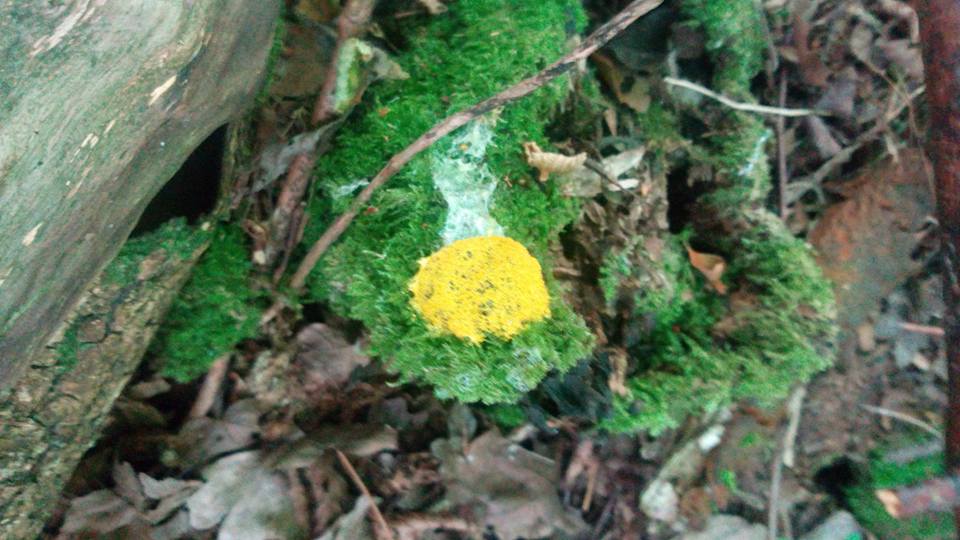
Fuligo septica. , a Slime Mould I found in the woodlands. I’d been wanting to find a one since doing a presentation on them in my first year of university

A Green-legged Sawfly I think... (Tenthredo mesomelas)

Blattodea (Cockroaches) - the most misunderstood insect order. 
This might be the species called Dusky Cockroach (Ectobius lapponicus)

The Emperor of dragonflies (Anax imperator)

Scorpion Fly (Panorpa germanica)- looks like a mish-mash of other invertebrates

Leaf-cutter Bee (Megachile spp.) hiding in the bee hotel - never knew an insect could be so cute

A pseudoscorpion we found in a King Alfred's Cake (which is a fungus, not a cake!)


Friday, 18 September 2015

Galling yet spanglely

Galls are weird. A parasitic insect lays its egg in the epidermis of a leaf, it hatches out and the tiny larva then exudes hormones, messing with the plant's cell division and causing mutations of plant tissue.

Spangle Galls on an Oak leaf. At the top near the thumb is a young Cherry Gall

These mutations form specific structures to each species, which become a source of food and protection for the larva. A rather enclosed and sedentary lifestyle, kinda of like ecologists writing up their survey reports in winter.

Ecology student Felix identifies gall species in Goat Meadow

Felix is a 3rd year Ecology project student, visiting our biodiversity sites from Royal Holloway University (my old stomping ground). He is studying the prevalence of galls on Oak leaves, looking for differences between species in changing environmental conditions.

Silk Button Spangle Gall (Neuroterus numismalis)

The types of gall he is studying are formed by tiny wasps of the family Cynipidae. This group contains many species, and the adult wasps are so small that we barely notice them. It is much easier to identify the species by the unique structures their larvae have created.

Smooth Spangle (Neuroterus albipes)

At the top of the picture: Common Spangle Galls (Neuroterus quercusbaccarum)

You can often have several different gall species on one leaf. The darker one below these Common Spangles is quite an unusual one...

Cupped Spangle (Neuroterus tricolor)

Either this species is very uncommon, or just particularly under recorded in the UK. In any case, an interesting find and I reckon the species distribution map could do with updating.


Despite the tough materials which galls are formed from, they are not immune from enemy attack... 


Looking more closely, Felix spotted this tiny shady character hanging out on out the Silk Button Spangles, and she is no galler... 

A torymid wasp

This is a 'parasitoid' of the gall wasps, using a long ovipositor to lay her own eggs deep into the spangles. Her larva will then hatch and slowly feed on the other within (nature is pretty brutal). I googled the Torymidae wasps to find out more, and found out a few species are hyperparasitoids, meaning they are parasitoids of the parasitoids... I then stopped reading and went to bed.

Here are a few other weird and wonderful species of gall about the place, all belonging to the family of cynipid wasps:

Knopper Gall (Andricus quercuscalicis) growing on an acorn

Marble Gall (Andricus kollari) on a leaf bud

Cherry Gall (Cynips quercusfolii) growing on a leaf vein

Robin's Pincushion (Diplolepis rosae) on a wild rose leaf bud

Not only galls are found hanging about on the Oak leaves...

Possibly a Grey Dagger Moth caterpillar, which has a cool species name (Acronicta psi

Theridion pallens; a tiny comb-footed spider. The female is guarding her sputnik-like egg case

Good luck with the rest of the project Felix (particularly the statistical analysis part, I've been there myself)!

Tuesday, 21 July 2015

July roving records - Land East of the Railway Line

It was the last day for Royal Holloway student Mark on his work experience placement, so we had packed out the schedule with surveys. First thing in the morning was a reptile refugia check, over in Goat Meadow...

Young Grass Snake - Natrix natrix (video by Mark)

Its always nice to see such a young specimen, as it confirms that they are probably breeding successfully in this area. (Plus they are super cute!)
   Into Upper Picketts Wood, the Nuthatches were all calling noisily (a family had recently fledged from our large bat hibernation box, now due a good clean out I reckon!)

Lovely things.
  Next job on the list was a Dormouse box check. These have been mostly occupied by nesting Great Tits and Blue Tits...


After closely checking one particular box, we were surprised to find a tiny mammal hiding amongst a clutch of Blue Tit eggs...

Pygmy Shrew - Sorex minutus
(Photo by Mark. Other brands of freezer bag also available)

Pygmy Shrews are smaller than Common Shrews in body size, but with proportionately longer tails.This one was probably only occupying this nest which was long abandoned by the parent birds.
   Back to the office to catch up on entering data into iRecord, a really handy online database for the general recording work. It was then back out to the ponds in the afternoon for another habitat assessment, recording butterflies as we went...

Ringlet Butterfly -Aphantopus hyperantus 

Comma ButterflyPolygonia c-album

We carefully scanned the tree canopies for Purple Hairstreak Butterflies, Favonius quercus. The clue is in the second part of the scientific name, as their life cycle centres around mature Oak trees...

...a hint of fluttering wings?

After a while spent craning our necks and feeling strain on jaw muscles, we finally glimpsed some pale fluttering forms up high in the canopy. This is what they look like close up:

 Purple Hairstreak Butterfly - Favonius quercus

I found this female a couple of years ago at the base of an Oak in Horleyland Wood, she had possibly come down from the trees to seek out water on a very hot day.
  Over on the Powerline Ride, we noticed a bumblebee nest had been roughly dug out, most likely by a hungry Badger looking for some tasty bumblebee larvae...


A few worker bees were still coming and going, plus a couple of large queens were hanging about which are more easily identifiable...

Buff-tailed Bumblebee (Bombus terrestris), queen

I've seen similar situations with wasp nests which have been dug out. Impressive stuff; Badgers must either have some immunity to stings or just very thick skin!
   On almost every piece of Hogweed (not the evil giant kind the tabloids have you worrying about...) there were Common Red Soldier Beetles in abundance. Its other name, the Hogweed Bonking Beetle is pretty apt....

Common Red Solider Beetle (Rhagonycha fulva) on Hogweed (Heracleum sphondylium)

Apparently these are taken as a sign that we are past the best of the beetle surveying season! I imagine a bunch of gloomy entomologists gathering in a pub to drown their sorrows once the first of the year is spotted.
  As we made our way over to the fish pond to carry out a habitat assessment, Blackcaps were singing all around. I like to think of their song as a nonesensical, whistling warble...

(Plus the sounds of a random jogger in the background)

We arrived at Pond 2 to carry out our habitat assessment, and Mark counted 3 Brown Hawker Dragonflies (Aeshna grandis) engrossed in their violent aerial battles.

Pond 2 - the fish pond

Here's an up-close pic of one which I found cold and sluggish in the grass a couple of years back...

Brown Hawker Dragonfly - Aeshna grandis

While we were watching, a big blue dragonfly crashed onto the scene and began vigorously chasing them... The typical hungry behaviour of the Emperor Dragonfly (Anax imperator) caused the Browns to make a hasty retreat! 
  Despite the pond being heavily populated by Mirror Carp, plenty of dragonflies and damselflies breed here successfully, probably due to the large variety of pond vegetation providing underwater cover...

Blue-tailed Damselfly (Ischnura elegans)

Close-up: Blue-tailed Damselfly (Photo by Mark Melvin)

Azure Blue Damselfly (Coenagrion puella) with diagnostic bow-tie marking on 1st abdominal segment

Banded Demoiselle (Calopteryx splendens) male

But no Large Red Damselflies to be seen whatsoever!! It feels rather odd as these are normally in abundance here.
   We were also being watched over by some kind of Emerald Dragonfly, shooting past us on his territorial run, but with no chance of a good view, I'm still not sure whether this was a Brilliant Emerald or Downy Emerald.

Finally, a rather stunning lepidopteran of the moth-kind, hanging around the pond...

Herald Moth (Scoliopterix libatrix) Photo by Mark Melvin

Thanks to Mark for all of your help and enthusiasm these past few weeks. We hope to see you again sometime if you get a moment in your packed-out summer!