A small group of novice spider-chasers gave up their Friday night, joining in a search around Gatwick's ancient woodlands in the Land East of the Railway Line. We met up after sunset, carrying with us a selection of torches and camera flashes, as the majority of web-spinning folk come out at nighttime.

Fence Post Jumper (Marpissa muscosa) is the UK's biggest species of jumping spider. Photo by Joe Bicker
We began our search in the logpiles to the north of Ashley's Field. During the day there is usually much Wolf Spider action, but this evening were just a few lovely jumping spiders hiding out under the bark.
Jumping spiders (Salticidae) are simply awesome with their brilliant patterning, large intelligent eyes and cute fuzzy palps. Anything which moves in stop motion must be some kind of supreme being. We coaxed one out of her silken cell and she turned out to be a veritable beast, over 1cm in length.
Marpissa muscosa. This species is probably under recorded and we find it regularly around Gatwick.
Photo by Joe Bicker
Shining our torches on a patch of nearby nettles, there were lots of little white globes on almost every plant...

Candy-stripe Spider (Enoplognatha spp.) Photo by Joe Bicker
There were scores of them; some yellow and green, others white, some almost entirely pink.

Photo by Joe Bicker
Wooden fence posts and rails are great places for spids and tonight we had Missing-Sector Spider (Zygiella x notata) and this chunky Walnut Orb-weaver (Nuctenea umbratica).

Just hanging out... Photo by Joe Bicker

They are names for their lovely patterning and the polished wood-finish. Great camoflage against the wood chippings. Photo by Joe Bicker
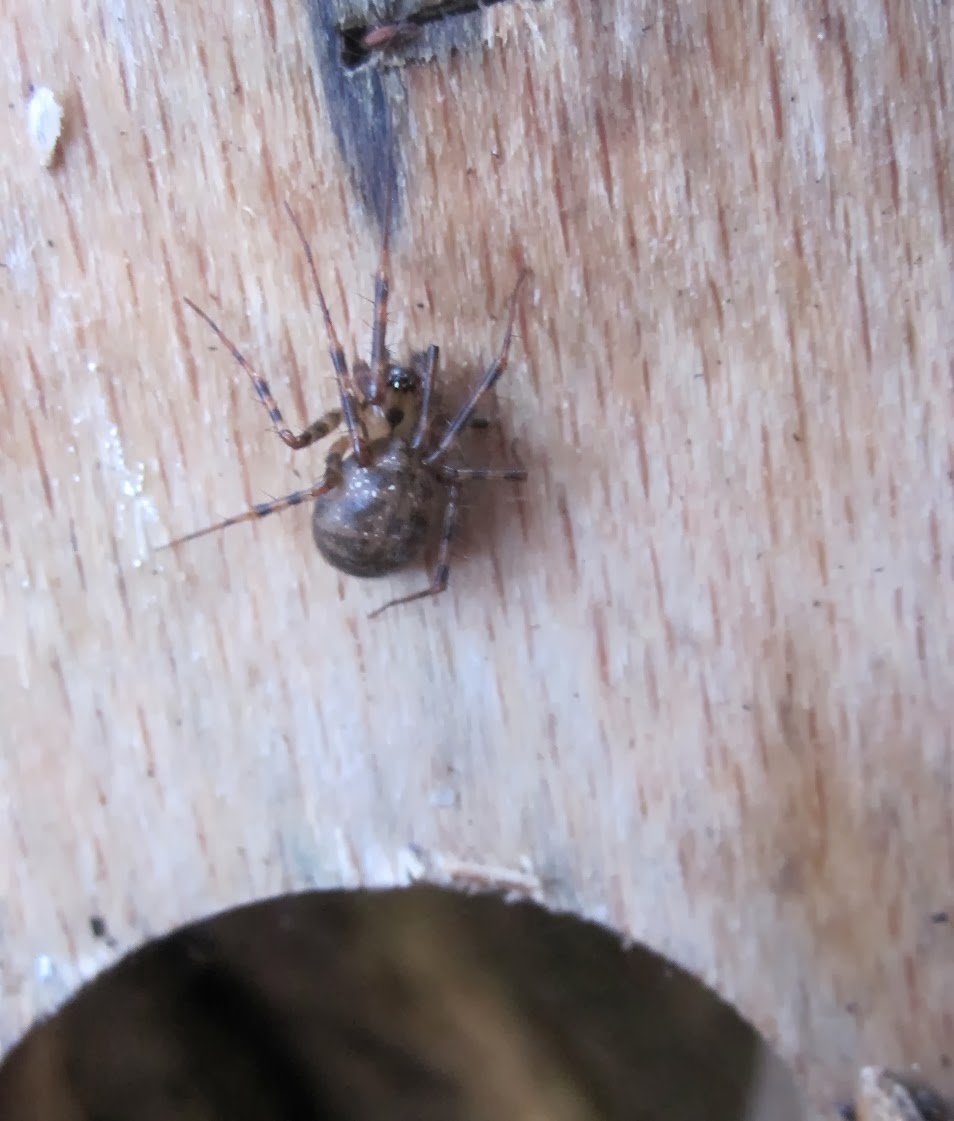
Checking the dead-hedge in Upper Picketts Wood, we easily picked up 5 species including this lovely Neriene
montana. A few spiders either do not have official common names, or just entirely forgettable ones, so I wont be bothering with all of them!

Neriene montana. It's abdomen kinda looks like a piece of chocolate. Photo by Joe Bicker
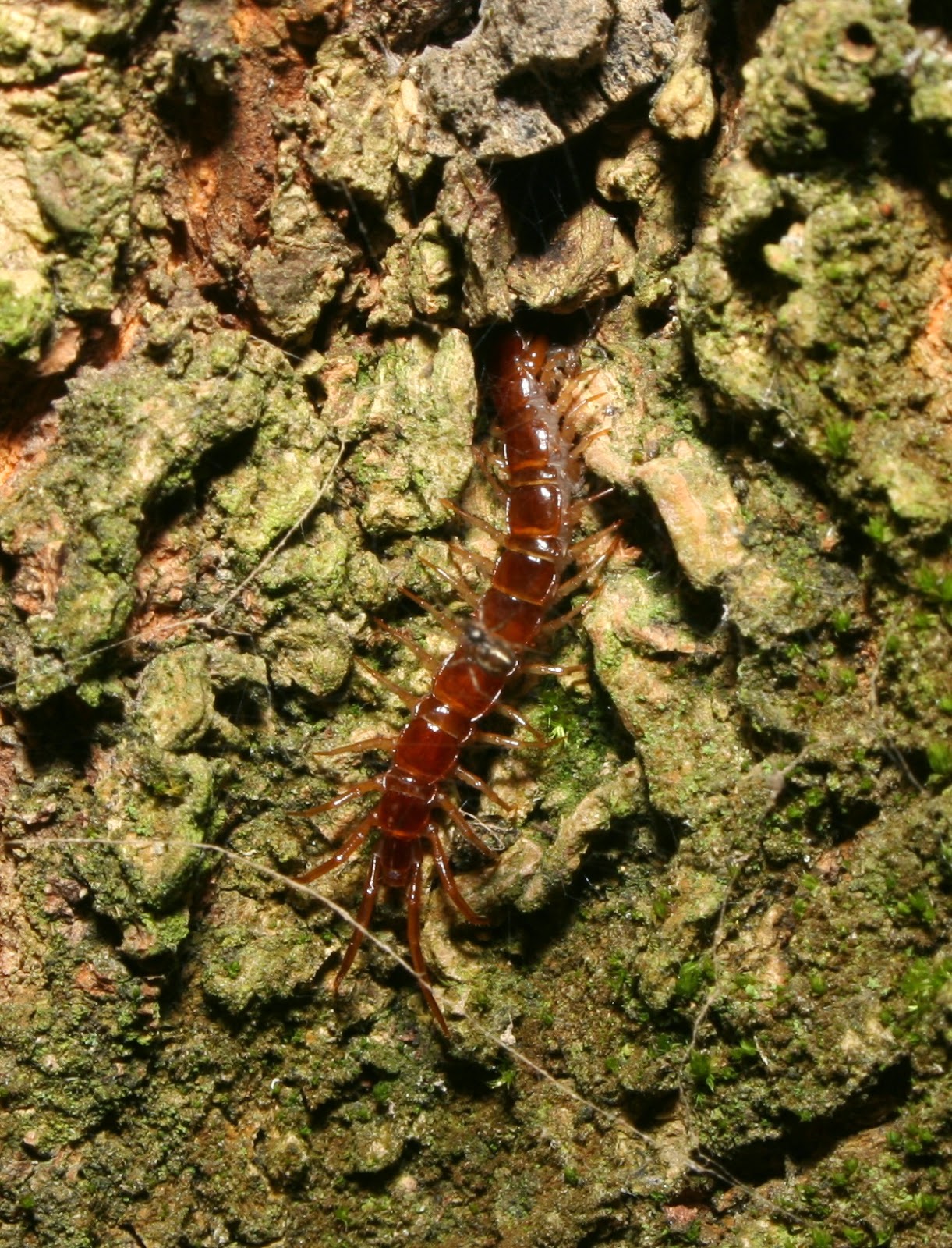
Not a spider but a centipede, probably a type of Lithobius. It doesn't look like chocolate. Photo by Joe Bicker
The dead-hedge was crammed with spids, several species even seemed to be overlapping webs (perhaps they are saving on rent). I forgot to check the species at the top of this picture, but the lower one was Labulla thoracica.

Photo by Joe Bicker
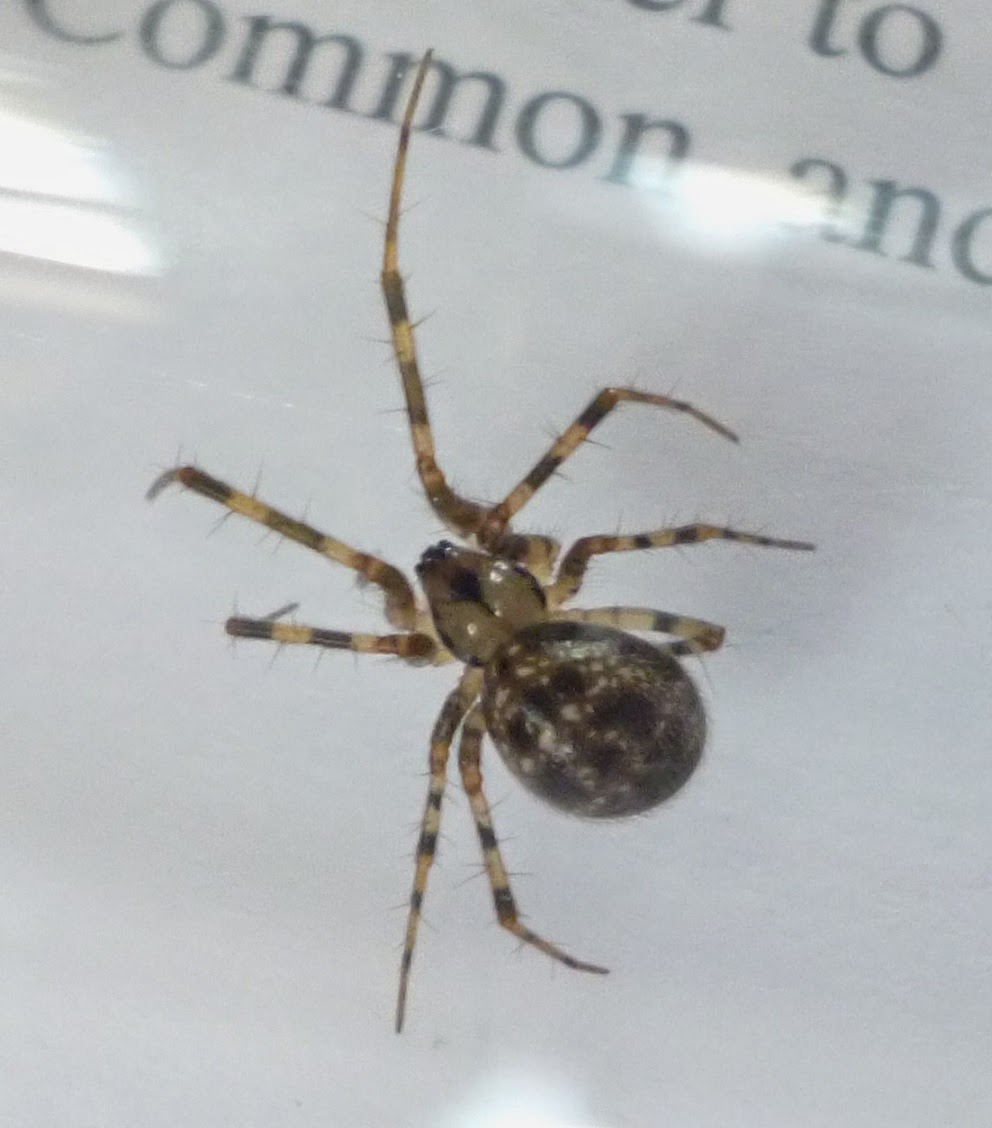
Labulla thoracica juvenile
A giant, towering Marsh Thistle proved an impressive find, like a spider tower-block apartment. Several Metellina of an unknown species and another Enoplognatha were tucking into a late night feast.

Tiny but effective fangs. Photo by Joe Bicker
Lot's of Walnut Orb Weavers were out tonight and I must re-emphasise that these are darn good-looking spids...

Photo by Joe Bicker
Not all of the arachnids out and about tonight were spiders; Harvestmen are also 8-legged hunters and belong to an order of invertebrates called Opiliones.

Not a spider: this Harvestman is tucking into a tasty fly. I haven't delved into Harvestman species yet.
Photo by Joe Bicker
Our last stop was Goat Meadow, and plenty of large orb-webs were decorating the thistles and Agrimony plants. They mostly belonged to this handsome Furrow Spider (Lariniodes cornutus), with it's impressively striking markings.

Furrow Spider (Lariniodes cornutus). Photo by Joe Bicker

Not a spider: a sleepy female Grass Snake (Natrix natrix) curled up under the mat by the brash pile.
Photo by Joe Bicker

Another Furrow Spider, tucking into some fly prey

This dew-covered little beastie blends in well with the seed head of a rush; Agalenatea redii

Either the egg-sac or the retreat of a spider

A tiny wee thing with her spiderlings up in the top left. I think this might be a Theridion species, but I didn't want to disturb her complex web-nest

A juvenile Four-spot Orb Weaver (Araneus quadratus) on the Agrimony
After midnight we were all spidered-out, so we retraced our steps back through Upper Picketts Wood. Lastly, we were lucky enough to catch a gimpse of this female Steatoda species (one of the False Widow spiders). These are incredibly shy creatures and she scarpered as soon as Joe took this single pic.

Thanks again to Donald, Megan, Joe and Sue for being so keen! Also a big thanks to the facebook group British Spider Identification for helping out with some of the idents. Our list from the evening:
1. Larinioides
cornutus
2. Marpissa
muscosa
3. Zygiella
x notata
4. Nuctenea
umbratica
5. Araneus
quadratus
6. Labulla
thoracica
7. Tegeneria
spp.
8. Steatoda
spp.
9. Meta spp.
10. Neriene
montana
11. Enoplognatha
spp.
12. Misumena
vatia
13. Agalenatea redii
14. Zelotes latreillei
15. Theridion spp.
13. Agalenatea redii
14. Zelotes latreillei
15. Theridion spp.