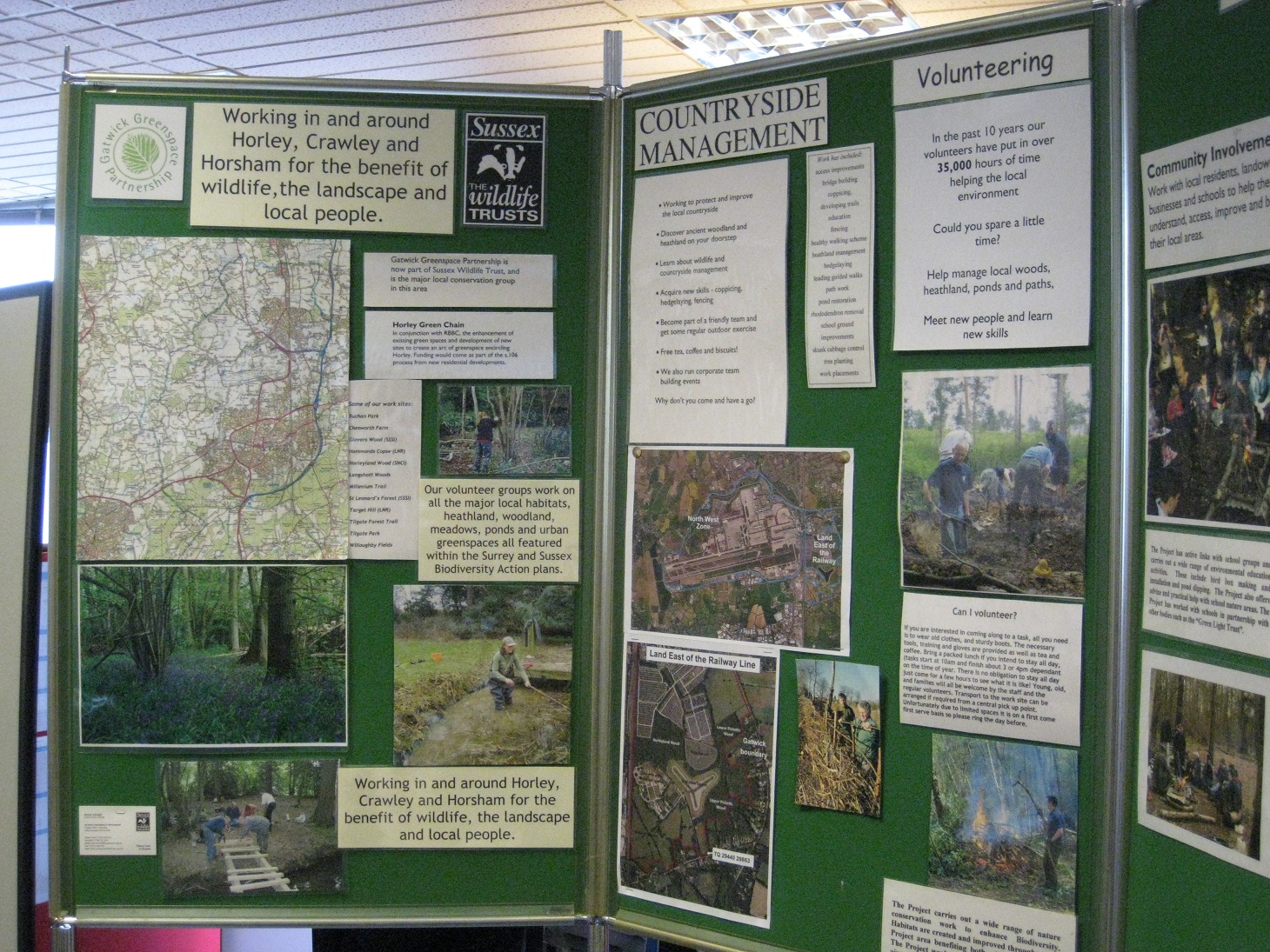
The names of our two conservation sites reflect the
(sometimes infuriating) tradition of airport acronyms...
NWZ: situated just above the western end of
the airfield
LERL: to the south-east of the South Terminal
However they are usefully descriptive names and 'ell', 'ee', 'arr', 'ell' (LERL) rolls off the tongue after a while. These two areas are
made up of mixed habitats containing their own related niches of wildlife. Our
aims are to conserve all of these habitats and enhance them. Were it not
for the airport then these buffering pockets of land would probably not be
here, instead being given over to housing development or agriculture.
Brockley Wood’s south-eastern edge
I am often asked why we go in and carry out such heavy
duty habitat management; it can seem counter-productive hacking back the brush and
young woodland instead of just leaving it up to nature. In the simplest terms,
changes in land use and development by people have caused our landscape to
become very fragmented. Ecosystems no longer function in the usual way and the isolation of habitats such as woodlands, lakes and grasslands tends to result in their containing fewer species and a less diverse structure. For example, if the
last remaining field maple in a small woodland fragment died out, there would
be less chance of re-colonisation from the surrounding area if there is no
other nearby woodland. A few dominating species in a small area are also more
likely to take over and out-compete others. So we intervene to maximise the
diversity of the land we have left and prevent a few species from becoming
overly dominant (in the context of the wider landscape).

Bankside coppicing along Man’s Brook, North West Zone
Recently we have begun rotational coppicing of shrubs and trees (ie. cutting back to ground level) to
provide a range of different-aged scrub as it regrows. A richer variety of
habitats is beneficial for biodiversity as it will suit a wider assortment of
species. However, if coppice stands are neglected they can grow up again into tall canopy cover, shading out the smaller ground flora. If hedgerows are left
uncut, they can grow out and become straggly, dying off in the centre and
eventually becoming lines of large trees. Coppicing helps to keep the integrity
of a habitat and maintain it in a medium-aged state.
Coppicing can affect environmental conditions such as ground temperature and light
levels
With conservation pressures ranging from small scale to
large, our best course of action is to maintain a high level of structural
diversity in a dynamic system, so that these many small havens will make up a
healthier whole and as many organisms will benefit as possible.
There are many very good reasons for preserving the
biodiversity of our planet … I am not going to list them all here, instead I will
refer you to this link (though I honestly don’t mind if you want to skip over
point no.9):
http://www.natureserve.org/consIssues/tenReasons.jsp
The thing which resonates the most with me about conserving
biodiversity is Aldo Leopold's statement in ‘A Sand Country Almanac’:
“ - if a missing cog or belt can render a car’s engine
useless—how much more might a missing organism affect the health of an
ecosystem whose complexity is overwhelming?”