Showing posts with label Laurie Jackson. Show all posts

Tuesday, 20 June 2017

Long haul (of lifers)

There is a secret society, an underworld some might say, within ecology. These people can look just like any nature lover you've met before; in fact, you have probably even passed them on the street...
 

There is an easy way to find them out though, as on a warm summer evening twitter feeds will light up with the phrases such as 'good haul!', and 'lifer!' or 'moth bonanza'! These are the moth recorders, and now and then, I join in to live life vicariously as a moth trapper.

Common Bird's-foot Trefoil and Meadow Vetchling, River Mole Grasslands

First off is some sweeping of the vegetation with nets, which turns up a few species which wont come to the light trap. I couldn't believe my luck with I spied this critter in the bottom of my net - an immaculate Six-belted Clearwing Moth (again something I have only ever seen before on other people's twitter feeds!)

Six-belted Clearwing (Bembecia ichneumoniformis
Nationally Scarce B. A good mimic of a parasitic wasp

We are lucky to have Jake Everitt leading us; he is the warden at Warnham Local Nature Reserve and has been running moth traps at Gatwick for around 4 years now. It sounds like this was a pretty exceptional summer night along the River Mole, as together he and Laurie Jackson counted 448 of 98 different species.

Angle Shades (Phlogophora meticulosa) - a common but lovely moth


This excellent field guide is the ultimate companion for any mother. (Jake has another guide like this which is devoted specifically to the micromoths!)

Macromoth identification is very visual and doesn't often require a entomological key 
(unlike the micromoths)

Blood-vein (Timandra comae) my personal favourite

Jake's highlights were the 13 Elephant Hawk-moths, 2 Southern Wainscott, the Dotted Fan-foot (a lifer for him) and Nephopterix angustella, which is a rare and distinctive little micro.

Elephant Hawk-moth (Deilephila elpenor) Another common species, the caterpillar 
feeds on willowherbs, fuscias and Himalayan Balsam

Ecology student Connor with his new Elephant Hawk pal

A rather poor photo of a Dotted Fan-foot (Macrochilo cribrumalis)
(Nationally Scarce B)

I felt pretty guilty that I had to leave at midnight, as Laurie and Jake were still out emptying and packing up the traps after 1.30am! What an incredible time of year to be out though, often I don't even want to go home...

Wednesday, 23 March 2016

Getting into ecology and conservation

Ask any ecologist or conservationist how they got into this line of work, and almost all will tell you about how they got stuck in with volunteering, and what awesome days they were!


Me in 2012, volunteering on a Water Vole survey with Row Baker at Arundel

Volunteering for the Sussex Wildlife Trust opened up to me a new world of local wildlife, and the passionate people who are trying to conserve it. There are many wildlife organisations out there wanting to engage with volunteers and recruit new members, and now social media makes it even easier to connect with these groups... a healthier use of Facebook and Twitter!

Myself and Laurie Jackson (who I also met through volunteering) have come up with a list of wildlife groups and recording schemes which people can get involved with, whether you're a student of biological sciences, a recent graduate, or just someone who is looking to get outdoors more and discover an endlessly rewarding new hobby...

Firstly, consider starting to keep a species list by signing up to iRecord: http://www.brc.ac.uk/irecord/

Events/ short courses in wildlife identification, ecology and field skills:


Sussex Wildlife Trust https://www.sussexwildlifetrust.org.uk/whats-on/category/adult-learning
Surrey Wildlife Trust http://www.surreywildlifetrust.org/whats-on?categoryid=7&categoryid=7
Knepp Wildlands Safaris https://www.kneppsafaris.co.uk/Safaris
Field Studies Council (FSC) http://www.field-studies-council.org/individuals-and-families.aspx


For families and kids:


Sussex Wildlife Trust family events https://sussexwildlifetrust.org.uk/whats-on/category/family-events
Surrey Wildlife Trust family events http://www.surreywildlifetrust.org/whats-on?categoryid=9
Amateur Entomologists' Society Bug Club  http://www.amentsoc.org/bug-club/
Field Studies Council family activities http://www.field-studies-council.org/individuals-and-families/family.aspx


Specialist courses and training ecological consultants:


Bat Conservation Trust http://www.bats.org.uk/pages/professional.html
Mammal Society http://www.mammal.org.uk/training
Amphibians and Reptiles Group http://www.arguk.org/events
British Trust for Ornithology http://www.bto.org/news-events/training
Chartered Institute of Ecology and Environmental Management (CIEEM) : http://www.cieem.net/events/category/56/cieem-workshopstraining
Acorn Ecology http://www.acornecology.co.uk/ecology-courses
Field Studies Council (FSC) environmental professionals http://www.field-studies-council.org/professional/courses-for-environmental-professionals.aspx
British Entomology & Natural History Society http://www.benhs.org.uk/about/meetings/
Freshwater Biological Association https://www.fba.org.uk/courses

The best advice after going on any training course or event? Get involved with wildlife surveys or field meetings straight away, either through the organisation you've just trained with, or a wildlife group local to you. Carry on with the learning and keep those newly acquired field skills honed; we all started out somewhere! 

National recording schemes & surveys:


There are many more than I have listed here, so you could also take a look at the Biological Records Centre website: http://www.brc.ac.uk/recording-schemes

Most these groups also have facebook pages with very active online communities, so there are always people to turn to for advice.

And for those of you more local to the Gatwick area, check out these active groups...


Wildlife groups and recording in Sussex:


Sussex Biodiversity Record Centre http://sxbrc.org.uk/
Sussex Mammal Group http://www.sussexmammalgroup.org.uk
Sussex Amphibian and Reptile Group http://www.sussexarg.org.uk
Sussex Bat Group http://www.sussexbatgroup.org.uk/
Sussex Ornithological Society http://www.sos.org.uk/
Sussex Botanical Recording Society http://sussexflora.org.uk/
Sussex Moth Group http://www.sussexmothgroup.org.uk/
Butterfly Conservation – Sussex Branch http://www.sussex-butterflies.org.uk/
British Dragonfly Society - Sussex Group http://www.webjam.com/bdssx
Sussex Sea Search https://sussexwildlifetrust.org.uk/what-we-do/living-seas/sussex-seasearch
Forest Row Natural History Group https://naturesbook.wordpress.com/events/

Sussex & Surrey:


West Weald Fungus Recording Group  http://www.westwealdfungi.co.uk/

Surrey:


Surrey Biodiversity Information Centre http://www.surreybic.org.uk/
Surrey Mammal group (Facebook page) https://www.facebook.com/groups/surreymammals/?fref=ts
Surrey Dormouse Group http://www.surreydormousegroup.org.uk/
Surrey Amphibians and Reptile Group http://www.surrey-arg.org.uk/
Surrey Bat Group http://www.surreybats.org.uk/
Surrey Birding Club http://www.surreybirdclub.org.uk/
Surrey Botanical Society http://www.surreyflora.org.uk/
Surrey Butterfly Conservation - Surrey & SW London branch http://butterfly-conservation.org/286/surrey--sw-london-branch.html
RiverSearch & RiverFly surveys http://www.surreywildlifetrust.org/what-we-do/living-landscapes/conservation-projects/riversearch


So there you go! My apologies as if I missed any off - please comment below and I can add to the lists.

Monday, 28 September 2015

Dormouse discoveries!

It is the end of a busy Friday afternoon and Laurie's phone rings. She looks down at the caller I.D., sighs and wonders what random question Rachel now has about bats (I still find bats incredibly complex and alien beings). Or birds. Or moths. Or Harvest Mice.
 

After reading my excited text, she tries to call me back right away. Of course, as I'm somewhere in Gatwick's woodlands with unpredictable phone reception, this goes on for sometime... 
   And so, after finally getting through to each other, I then get to say the words: we've got Dormice!

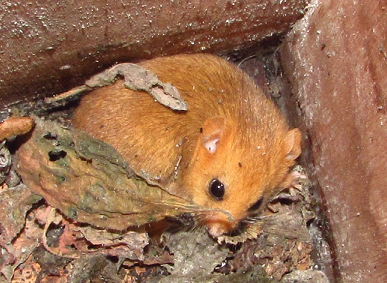
The elusive Hazel Dormouse (Muscardinus avellanarius)

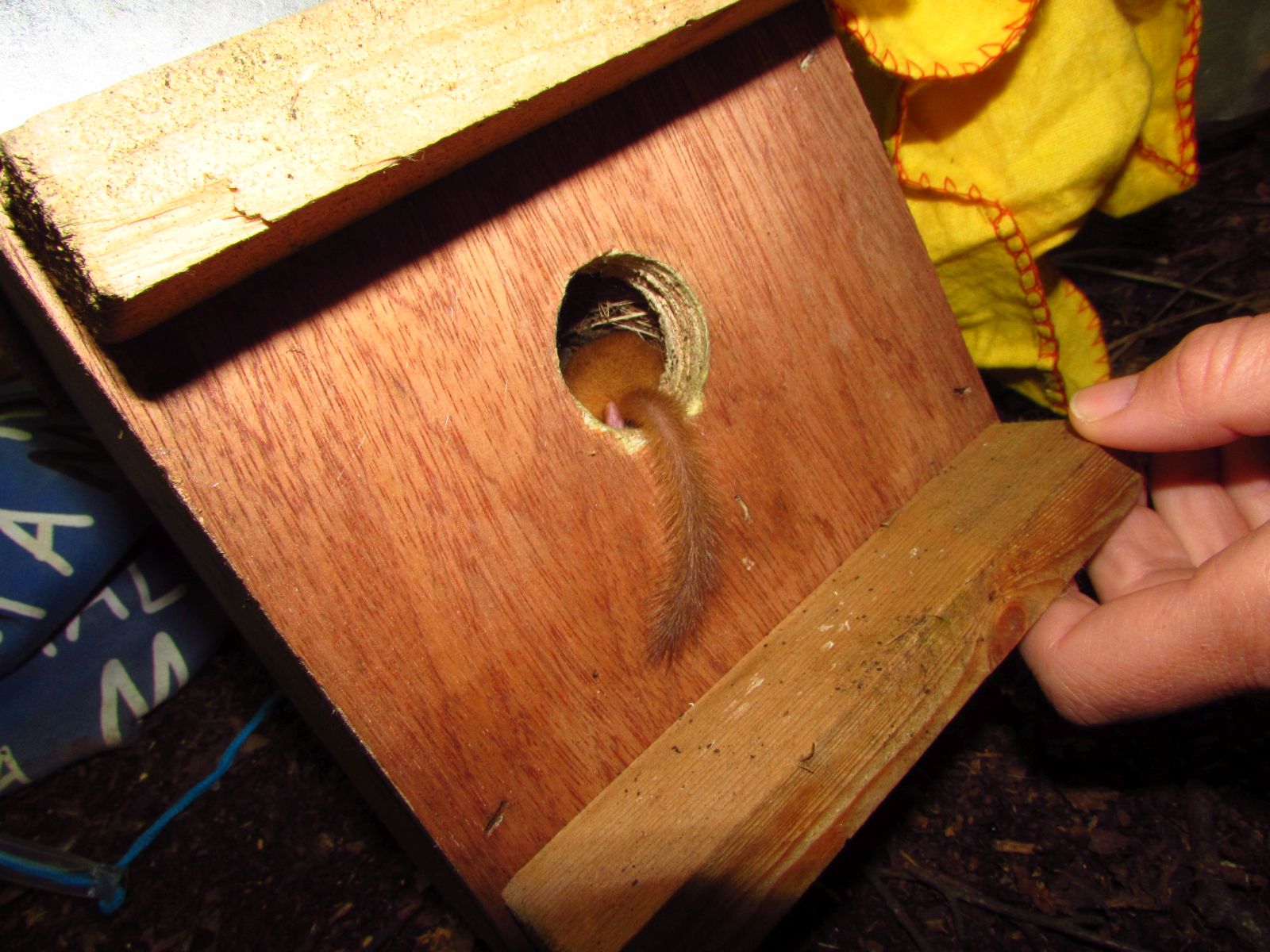
Gatwick's sneaky ginger-ninjas have finally been spotted in the fur; they couldn't elude us anymore! Laurie is a licence holder for several UK protected species and experienced in Dormouse handling, so I was awesomely appreciative that she shot up to Gatwick to lend us a hand. We found two individuals in separate boxes; here they are, resplendent in their golden-brown refinery!

Hazel Dormouse (Muscardinus avellanarius)

We reckon these might some of the best-looking Dormice around too... (Not that we're biased).

Hazel Dormouse (Muscardinus avellanarius)
Big eyes, small ears, fuzzy tail. Evolved for maximum cuteness

These furry fiends are notoriously difficult to detect - they live in low numbers, are arboreal (tree-dwelling) and mostly come out at night. Still, after 3 years of surveying it was starting to wear that we hadn't seen the little blighters in the fur. Quite frankly, they were making us look bad. 

On the other hand, our Wood Mouse and Yellow-necked Mouse record database had really come along!

For comparison: Yellow-necked Mouse (Apodemus flavicollis);
 darker fur, bigger ears, pointy nose... Bigger attitude!

She might look chunky, but this little female weighed about 19g, making her over half the weight of a Yellow-necked Mouse which tipped the scales at 40g. 

Hazel Dormouse (Muscardinus avellanarius
Hey, remember folks, the camera adds 10 pounds

Slightly insulting was the fact that they were found in boxes installed by Tom Simpson's volunteer group, rather than mine from the 3 years before. This goes to show there is just no accounting for Dormouse taste (being from Crawley after all).

Laurie checks age and sex, then pops it into the weighing bag. 

Unoccupied nest - the centre is tightly woven with fine strands of Honeysuckle bark,
 the outside is layered with recently fresh hazel leaves

For now, we will continue with monitoring the Dormouse population at this site under the supervision of licence holders, carrying out regular box checks and looking out for signs of breeding.

Home-sweet-home

About this time every year, a YouTube vid makes the rounds of the internet, featuring a Dormouse apparently snoring. The mammal officer who took the footage says the ridiculous sound was added on afterwards; the actual sound is more like a high-pitched whistle (d'awww!). Still, it is gorgeous seeing a Dormouse in torpor (deep sleep).


To find out more about the Hazel Dormouse, check out the People's Trust for Endangered Species.

Thursday, 10 September 2015

Dark Knights at Gatwick

Bat activity transect C, Land East of the Railway Line, July 11th 2015

It has felt like a good year for bats around our biodiversity sites, with lots of exciting acitvity monitoring by Laurie Jackson, Martyn Cooke and volunteers from Surrey Bat Group. We've been using 3 different survey methods here: activity surveys (walking set routes called 'transects', with bat detectors and recording equipment); trapping surveys (with Martyn's harp traps, loud speaker and bat call software system); and box checks (annual checking and cleaning of our woodland bat boxes).

Powerline Ride at dusk, Horleyland Wood

Although rarely seen, bats actually make up around a third of UK mammal species and so are a significant players in our ecosystems. Also being insectivores, they are directly affected by any crashes in invertebrate populations and are great indicators of our countryside's overall health.

Bat box recorder and logger 

Bat logger live sonogram image

This recording equipment is all a bit beyond me, but Martyn Cooke (who also works in air traffic control at Gatwick) loves his tech and is a dab-hand at collating and translating this data.

Measuring the forewing of a Common Pipistrelle.
(To handle bats, you must be trained and hold appropriate licenses.)

Weighing a Pip in a cup

The biometric data collected includes the species type (some can only be identified by close examination in the hand), weight, sex, rough age, breeding condition and general health of the individual. I need to check again with Martyn, but I think we are up to 10 different species of bat recorded at Gatwick.

Assessing wing joints and bone ossification to gauge the age.

This health check might look pretty intrusive for a bat, but they are only kept for a few minutes before they are released back out into the night.

Common Pipistrelle (Pipistrellus pipistrellus)

Brown Long-eared (Plecotus auritus)

Bats face many threats due to extensive habitat loss and fragmentation from development, as such they are all protected by UK and European law. You might associate bats with roosting happily in buildings, but they really need natural features such as grasslands, hedgerows and woodlands to hunt and forage in. The monitoring and conservation efforts led by organisations such as Bat Conservation Trust are of vital importance to conserve the UK's bat species. 

Get out of here, you.

Its not always deemed socially acceptable to be out in the woodlands after dark. but this bat work gives us special licence. Its also great to see and hear all the other wildlife out and about our biodiversity areas on warm summer evenings:

Light Emerald Moth (Campaea margaritaria)

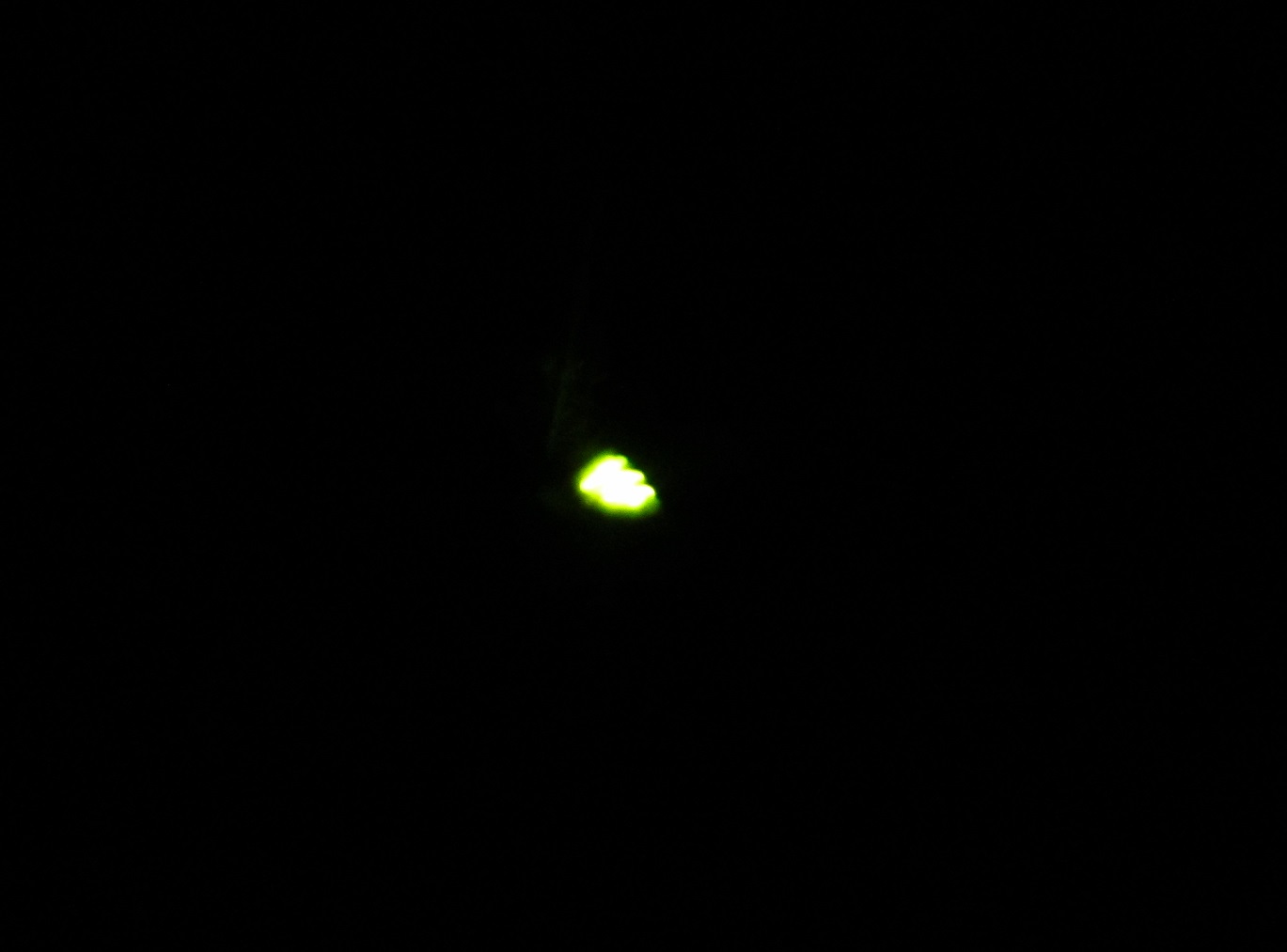
Glow Worm (Lampyris noctiluca), female

Photo with flash reveals that a Glow Worm is a large beetle

We often hear the strange hoarse squeaks of juvenile Tawny Owls, which sound like their voices are breaking...
Plus a rather impressive (and one of my favourite) species we have resident in our woodlands...

Araneus angulatus male, a rare spider in the UK, restricted to the southern counties

To learn about monitoring bats in your area, why not check out your local bat group.

Monday, 17 November 2014

Micro-mouse mysteries

I have been fortunate enough to meet some really passionate conservationists through the Wildlife Trusts, who remind me the most essential part of any scientific study is to define the question which needs answering. 

North West Zone at Gatwick, adjacent to the River Mole grasslands

Subject mammal: orangey fur, big ol' eyes, small ears and a prehensile tail

The Harvest Mouse (Micromys minutus) is a rather iconic, yet understudied mammal in our fair isles, so folk like Jim Jones and Laurie Jackson are working to fill the gaps in our knowledge. We know that Harvest Mice are present at the airport, but how well are they doing and what are their habits once autumn rolls in and the wetland water levels rise? Earlier this month, Jim and myself oversaw a survey in the North West Zone, tying into a larger population study by the Surrey Mammal Group.

Monday Evening: Setting up on site


Jim mixes up a tasty snack for our small mammal traps
(peanut butter, apple, oats and mealworms)

The aim is to compare the effectiveness of 3 types of humane mammal traps at different heights in the vegetation. This could help inform conservationists of the best way to target sample Harvest Mouse populations.

Longworth Trap on a stand

Sherman Trap on a stand
  
Trip Trap (which doesn't always trigger, meaning free food and accommodation for luckier beasties)

And did we find what we were looking for? Here is a photo diary of our results...

Day 1:

6.30am. Cool and misty morning along the River Mole, north-west of the airfield

Trainees arrive on site and Jim gives us a brief on the methodology

Our first capture is a young Field Vole (Microtus agrestis), gently scruffed to determine the gender

Noon session: a less-than-amused Wren (Troglodytes troglodytes) popped out of a longworth trap, none the worse for wear!

Evening session: 6.30pm

Persistently cute; same Field Vole (Microtus agrestis) gets emptied out for the 3rd time today


Peak Counts:
Field Vole (Microtus agrestis) x 2
Wood Mouse (Apodemus sylvaticus) x 3
Wren (Troglodytes troglodytes) x 1

Day 2:


Wood Mouse (Apodemus sylvaticus)

Yellow-necked Mouse (Apodemus falvicollis), a larger, longer-toothed cousin of the Wood Mouse

Peter bravely demonstrates how to scruff a Yellow-necked Mouse


Peak counts:
Bank Vole (Myodes glareolus) x 2
Wood Mouse (Apodemus sylvaticus) x 8
Yellow-necked Mouse (Apodemus flavicollis) x 1

Day 3:


We don't normally trap in persistently cold conditions due to welfare issues, but last night's temperature dropped to a frostier level than expected. Luckily no casualties, plus many of the traps were frozen open with all the bait snaffled (but plenty of rodent poop left in return).

Survey form

Noon session: Joe and Megan photograph the contents of a trap...

Which turns out to be our first Common Shrew (Sorex araneus)


...Still no sign of that evasive Micro-mouse!

Peak Counts:
Bank Vole (Myodes glareolus) x 2
Field Vole (Microtus agrestis) x 1
Wood Mouse (Apodemus sylvaticus) x 3
Yellow-necked Mouse (Apodemus flavicollis) x 1
Common Shrew (Sorex araneus) x 1

Day 4:


Kathryn and Sue helping to replenish bait in the traps

Evening session: Trip-trap; resolutely empty

Bank Vole (Myodes glareolus)


Peak Counts:
Bank Vole (Myodes glareolus) x 2
Field Vole (Microtus agrestis) x 2
Wood Mouse (Apodemus sylvaticus) x 6
Yellow-necked Mouse (Apodemus flavicollis) x 2

Day 5: Final morning


A relatively peaceful moment at the airport, reminds me of the film 'Warm Bodies'!

Jim holds the final Field Vole

Final Field Vole is having trouble letting go... 
(perhaps after being spoiled by days of free full-board accommodation)


Peak Counts:
Bank Vole (Myodes glareolus) x 1
Field Vole (Microtus agrestis) x 2
Wood Mouse (Apodemus sylvaticus) x 1
Yellow-necked Mouse (Apodemus flavicollis) x 3

Apparently, Harvest Mice will take their holidays around this time of year while the rest of us are still working hard. Who knows why we didn't find any, but judging from the number of nests we have seen on this site, 2015 will be be the year!